
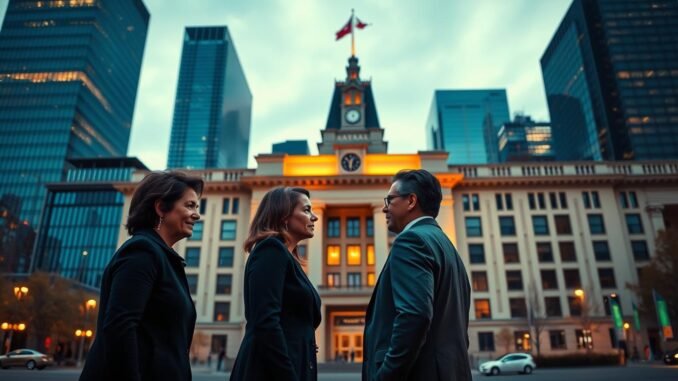

Seventy percent of Canadians live in cities. Yet, one city hall meeting can decide billions in services. Today’s news from Montreal shows this power. On Wednesday, Nov. 5, 2025, outgoing mayor Valérie Plante welcomed mayor-elect Soraya Martinez Ferrada.
They started with a handshake and then a closed-door briefing. This set a cooperative tone for municipal politics.
Plante said continuity is key after Montrealers voted. She wanted the meeting early, unlike in 2017. The message for Canada was clear: respect the vote, keep services steady, and share files without drama.
Both leaders discussed important issues like homelessness and housing. They also talked about the city budget and two major sites. The Blue Line extension was another topic.
The tunnel-boring machine has arrived at the Port of Montreal. It will start tunnelling in April and add five new stations by 2031.
Provincial support will reopen a building near City Hall as a warming centre. Martinez Ferrada praised Plante’s resilience over eight years. Despite a tough race, both leaders showed calm and credible governance.
This leadership transition is more than a ceremony. It’s a working agenda that affects everyone. From the Blue Line to shelters, Montreal is focused on cooperation and delivery.
City Hall handover signals a smooth transition of power in Montreal
Montreal has started a new chapter at City Hall. This change is marked by a smooth handover and a focus on political civility. News outlets from Quebec and Canada covered this event, showing it as a sign of continuity for everyone.
Symbolic handshake and closed-door briefing at City Hall
Before the doors closed, Valérie Plante and Soraya Martinez Ferrada shared a symbolic handshake. They then had a private briefing on important files. This showed that services and projects will keep going as usual.
The Montreal Gazette and The Canadian Press highlighted the smooth transition. This move aimed to reassure City Hall workers and investors from across Quebec and Canada.
Why public gestures matter in reducing political cynicism
Visible cooperation can help fight fatigue and doubt. A simple handshake can calm things down and set the tone for political civility. When leaders show respect, trust grows, making city hall news more useful.
These gestures also set the tone online and off. They remind us that work at City Hall keeps going, even with new teams.
Historic firsts: women leaders and immigrant representation
Montreal has reached a milestone with women leaders and immigrant representation. Soraya Martinez Ferrada is the second woman mayor and the first with an immigrant background.
Both leaders spoke out against digital hostility and called for respectful debate. Their words are important in Quebec and Canada, where there’s a push for inclusive leadership and civility at City Hall.
Profiles in leadership: Valérie Plante and Soraya Martinez Ferrada
Montreal leadership is shaped by two unique paths. Valérie Plante’s legacy in City Hall stands out. Soraya Martinez Ferrada’s story is one of resilience and steady growth. Their journeys offer a calm approach to change.
Plante’s legacy: progressive values and safer streets
Plante has focused on progressive values and a social mission. She made travel safer by improving bike lanes and transit. Her work aimed to make daily life better.
Her legacy also includes environmental care and inclusive policies. Plante’s team believed quality of life is a right, not a privilege. They kept this message strong, even during tough times.
Martinez Ferrada’s journey: from child refugee to cabinet minister to mayor
Martinez Ferrada’s story starts as a child refugee in Canada. She grew through civic work and entered federal politics. She became a cabinet minister, building connections across Quebec and Canada.
Now, as mayor, she faces big challenges like a transit strike and housing issues. Her approach is practical, aiming to improve mobility and housing while keeping past achievements.
Marks return to municipal leadership for Soraya
Soraya returns to municipal leadership, bringing her federal experience and grassroots roots. She emphasizes working together, using data, and making clear choices.
She sees safer travel and housing as community efforts. Her focus is on Montreal and Quebec’s biggest city, not just national headlines.
Montreal
Montreal is at the heart of Quebec and Canada, where culture and commerce meet. Its history is seen in streets with parks, markets, and landmarks. Modern transit and housing plans change neighbourhoods like the Plateau and Saint-Laurent.
City hall news affects services like snow removal and roadwork. It impacts how people move, meet, and create in the city.
The city’s identity shines through attractions, events, and festivals all year. Decisions on mobility and public space influence shopping on Sainte-Catherine Street and dining in Little Italy. The Blue Line extension will change commutes, connecting culture to daily life.
Media like the Montreal Gazette, the Canadian Press, and CBC report on City Hall decisions. They show how budgets, permits, and plans affect tourism, small businesses, and safety. In Montreal, city policies become real for residents, from morning café stops to late-night shows.
| Theme | Neighbourhood Impact | Everyday Benefit |
|---|---|---|
| Mobility and Blue Line | Stronger links between east-end hubs and central attractions | Shorter trips to dining, shopping, and festivals |
| Housing and Services | Support for mixed-use growth near transit in Quebec’s largest metro | Better access to jobs, schools, and cultural events |
| City Hall News | Clear signals to businesses and venues across Canada | Predictable schedules, safer streets, and smoother visits |
Montreal balances its heritage with renewal. City hall news shapes the city’s rhythms, guiding people to festivals, cafés, and waterfront walks. Each decision makes a difference.
Key priorities discussed: housing, homelessness, and the budget

The new leaders focused on Montreal housing, homelessness, and the budget. They promised steady service and a practical policy reset. This will keep services stable in Quebec and Canada.
Housing strategy shifts: from bylaws to incentives and partnerships
They looked at major files and decided to change from strict bylaws to incentives and partnerships. This new approach aims to make mixed-income buildings more accessible. It also helps builders and non-profits get permits faster.
This change is expected to speed up projects and lower risks. It matches approvals with infrastructure plans. It also uses federal and provincial programs in Quebec and Canada.
Addressing a growing homelessness crisis before winter
Homelessness is seen as a pressing issue as winter approaches. The plan is to increase warming spaces near City Hall and add beds in St-Laurent. This is thanks to provincial support.
Street outreach and transport links will be improved. This will help people find help quickly. Health and community housing partners will work together to provide services.
Budget continuity amid leadership change
The budget will stay stable with some adjustments. The main goal is to keep operations running smoothly. They will also fund shelters, speed up approvals, and support new builds.
They aim for results and clear updates in city hall news. A 19m budget was discussed for early actions. These actions will support the new policy and partnerships.
Blue Line extension update: timeline, tunnelling, and five new stations
City hall news reports steady progress on the Montreal Blue Line extension. It’s a key part of Quebec’s transit growth. The project includes five stations and aims for a 2031 opening.
Tunnel-boring machine arrival at the Port of Montreal
The tunnel-boring machine arrived at the Port of Montreal two weeks ago. This step keeps the project on track, as discussed at City Hall. It boosts confidence in the tunnelling schedule.
Assembly underway; tunnelling slated to begin in April
Crews started assembling the machine on site. They’re getting ready for deep-ground work. Tunnelling is set to start in April, as planned.
Targeted opening by 2031 and city-wide mobility impacts
The Montreal Blue Line extension will add five stations by 2031. It promises faster travel and better connections to jobs and schools. The project will also support new housing and services, meeting Quebec and Canada’s infrastructure goals.
Key takeaway: steady milestones, clear targets, and a project designed to carry new riders where they need to go.
Transit and mobility: STM strike and bike path audit
City Hall is focusing on keeping people moving with the new leadership. The Montreal STM strike has made daily travel hard for many. The city is working to make travel safer this winter.
STM strike as a top priority for the mayor-elect
Soraya Martinez Ferrada is making the STM strike her main concern. She knows it’s hard for workers and businesses downtown. She wants to fix the Blue Line schedule and keep the city moving.
Bike path “audit” and transparency: existing reports to be made public
The mayor-elect is starting a bike path audit with full transparency. She plans to share two reports on the bike network’s state. She wants to hear about recent accidents and complaints before making any changes.
Balancing safety, accessibility, and business needs
The city is working to make travel safe and accessible. Merchants need reliable delivery times, while riders and pedestrians want safe spaces. The city aims to make streets safe for everyone as winter approaches.
- Short-term transit measures: shuttle reinforcements during the Montreal STM strike and better platform updates.
- Bike corridor checks: quick fixes at high-risk nodes ahead of a fuller bike path audit rollout.
- Open data: regular release of crash, complaint, and ridership figures to support transparency and safer travel.
Urban development hotspots: Namur–Hippodrome and Bridge–Bonaventure
Two key areas are set to lead Montreal’s growth in Quebec, Canada. At Namur–Hippodrome and Bridge–Bonaventure, plans are to build homes, jobs, and services. This is all part of a transit-focused plan, with clear goals shared in city hall news.
Unlocking housing and mixed-use development
These plans aim to create more homes and mixed-use areas near public transport. The Blue Line schedule guides these decisions, ensuring the right balance of density, retail, and public spaces. Incentives from Soraya Martinez Ferrada are expected to encourage builders to work faster, focusing on family homes and stable rentals.
Stakeholder coordination across Quebec and municipal agencies
Getting approvals from Quebec ministries and local agencies is key to moving forward. By planning utilities, streets, and parks together, costs stay low and builders are supported. Regular updates in city hall news help residents follow progress and understand the planning process.
Transit-oriented growth and neighbourhood quality of life
At Namur–Hippodrome and Bridge–Bonaventure, new homes will be close to public transport, cycling paths, and safe walking areas. This design aims to reduce traffic, shorten commutes, and boost local businesses. Thoughtful planning, including mid-rise buildings and green spaces, will help preserve neighbourhood charm while improving daily life in Montreal.
Winter readiness: warming centres and provincial support
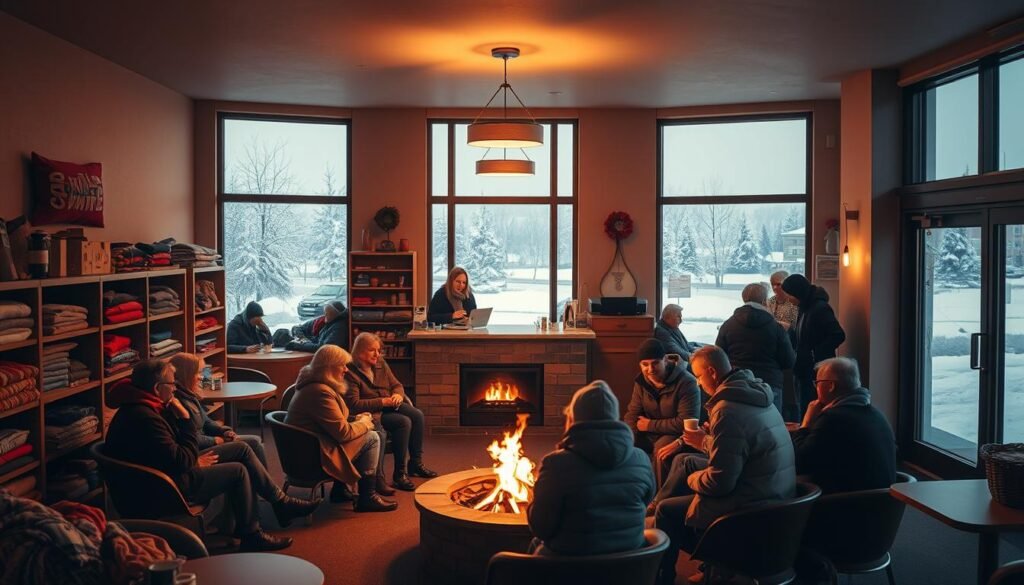
As winter gets colder, Montreal is ready. City officials have set up steps to keep services running smoothly. They focus on helping people, clear plans, and stable budgets in Quebec, Canada.
Lucien-Saulnier building near City Hall to reopen as a warming centre
The Lucien-Saulnier building near City Hall will reopen. It will host warming centres thanks to provincial funding. This place offers a safe space for those without homes, with heat, food, and help nearby.
This location is close to public transport and outreach teams. It helps manage the downtown area’s shelters and services.
Additional capacity in the St-Laurent borough
St-Laurent is getting more cots and staff for the night. This will help more people find a safe place to sleep during the cold. It’s a big help for those in need in Quebec, Canada.
The borough’s plan includes flexible hours and outreach. This way, it meets local needs and keeps centres from getting too full.
Collaboration with Quebec for emergency services
Working with Quebec, Montreal gets extra funding for emergency services. This funding helps with longer hours, transport, and crisis teams. It makes sure the city’s budget can handle sudden needs while working on long-term solutions.
By sharing information and meeting regularly, Montreal and Quebec stay in sync. This ensures the city is ready for winter, with services available when needed.
Tone at the top: against polarization and for cooperation
In Montreal, the handover was marked by clear words and steady actions. Valérie Plante called on leaders to fight against political division. She urged them to choose civility when things get tough. Soraya Martinez Ferrada also spoke of working together for the city’s needs.
The handshake and joint briefing showed a path for working together. This approach will be tested in the coming weeks. By speaking as one after a tough campaign, they aimed to boost public trust.
They chose to debate without turning it into a fight. This simple decision showed that Montreal’s institutions can work together, even when things change. By talking openly about working together, they hope to reduce cynicism and keep everyone on the same page.
| Signal | Intended Effect | Where It Shows Up | Why It Matters |
|---|---|---|---|
| Joint remarks | Reduce political polarization | Briefings, scrums, city hall news | Builds public trust and steadies transitions |
| Handshake | Model civility | Council steps, public events | Sets norms for teams and stakeholders |
| Shared priorities | Strengthen civic cooperation | Housing, transit, winter readiness | Aligns Montreal, Quebec, and Canada objectives |
| Consistent messaging | Stabilize operations | Internal memos, service updates | Protects service delivery and timelines |
Culture, festivals, and attractions: continuity for Canada’s cultural capital
Montreal’s culture shines when transit is smooth, streets are friendly, and schedules are set. As leaders stabilize, organizers and locals eagerly await signs that events, attractions, and daily travel will keep moving forward in Quebec and Canada.
Safeguarding events that drive tourism and local pride
Events like Festival International de Jazz de Montréal, Just for Laughs, and Mural attract crowds. Reliable routes and clear permits keep these events running smoothly. This stability boosts tourism and supports local businesses.
City hall news on schedules and safety reassures partners. It tells hotels near Quartier des spectacles and venues in Old Montréal that the calendar will stay full during peak times.
Infrastructure reliability for festival seasons and major gatherings
Coordinated work and quick repairs avoid delays. When the STM shares service updates and detour maps, it ensures access to places like the Montreal Museum of Fine Arts and Parc Jean‑Drapeau.
Improved plazas, lighting, and snow clearing keep things moving. These efforts help maintain visitor flows that are key to Quebec’s creative economy.
Supporting dining, shopping, and neighbourhood vibrancy
Festive streets invite people to stay longer, book tables, and shop. Street closures, loading zones, and wayfinding help dining patios on Saint‑Denis and shopping areas along Sainte‑Catherine welcome guests after shows.
With steady leadership and timely city hall news, businesses adjust hours to match events. This makes it easy for residents to enjoy attractions all year round, supporting Montreal’s culture and tourism across Canada.
| Season | Flagship Festivals | Nearby Attractions | Local Business Impact | Mobility Priorities |
|---|---|---|---|---|
| Winter | Montréal en Lumière, Igloofest | Old Port, Place des Arts | Hoteliers, dining pop‑ups, boutique shopping | Snow clearance, metro frequency, heated shelters |
| Spring | Blue Metropolis, Festival TransAmériques | Quartier Latin, Musée d’art contemporain | Bookshops, cafés, pre‑show dining | Construction coordination, bike lane upkeep |
| Summer | Jazz, Just for Laughs, Osheaga | Parc Jean‑Drapeau, Old Montréal | Patios, late‑night dining, destination shopping | Extended transit hours, pedestrian zones, ferry links |
| Fall | POP Montreal, Gardens of Light | Botanical Garden, Little Italy | Neighbourhood markets, artisanal dining | Wayfinding, first‑snow readiness, bus reliability |
Media moments and public messaging: what was said and why it matters
Montreal’s handover was marked by clear messages to calm nerves and set a positive tone. Leaders spoke to cameras and microphones, aiming to reassure residents in Canada and Quebec. They highlighted progress and shared goals.
“Don’t look at your social media”: managing online toxicity
The incoming mayor advised, “Don’t look at your social media.” This simple advice brought smiles and made a serious point. It showed how online negativity can distract and drain energy.
Setting clear boundaries helps focus on important issues like housing and transit. By addressing this issue, the team set a standard for healthier discussions.
Commendations and civility after a hard-fought campaign
Public thanks were exchanged. Soraya Martinez Ferrada praised Valérie Plante for her achievements and resilience. Plante wished the new team success and acknowledged their legitimacy.
Media like the Canadian Press, CBC, and the Montreal Gazette highlighted the importance of civility. In Quebec’s largest city, this approach keeps coalitions strong and momentum going.
City hall news and signals to investors and communities
The briefings focused on key areas like homelessness, housing, transit, and development. These updates reassure investors and communities, promoting long-term planning.
Services were promised to continue without interruption, while markets were assured of alignment with regional goals. This mix of reassurance and detail is key to effective media messaging.
| Outlet | Core Signal | Audience Impact | Policy Thread |
|---|---|---|---|
| Canadian Press | Continuity of operations | Boosts investor confidence | Budget discipline and timelines |
| CBC | Civility and transparency | Reassures residents across Canada | Transit reliability and social supports |
| Montreal Gazette | Local priorities and progress | Clarifies city hall news for Montreal | Housing, homelessness, and development in Quebec |
What to watch next: milestones, decisions, and community impact
Montreal is setting new goals in transit, housing, and streets. The city will start with careful planning. People in Quebec and Canada will follow the progress through clear updates.
April tunnelling start and Blue Line construction checkpoints
The Blue Line project will begin in April. Crews will work on tunnels, aiming for five stations by 2031. Schools and businesses nearby will get updates and alerts.
Expect weekend closures and dust limits. A detailed log of milestones will help build trust in city updates.
Policy updates on housing incentives and bike paths
New housing rules will encourage more rentals and family homes near transit. The city will work with co-ops and non-profits. They will share data on approvals and project timelines.
A bike path audit will combine studies and crash data. Heat maps and repair plans will help riders and merchants.
STM labour talks and service restoration timelines
The STM strike will affect bus and métro service. Early agreements on staffing and safety are key. Riders will look for reliable service, more so in winter.
Shuttle services and priority lanes will help during delays. Updates through city hall news will help plan commutes.
| Focus Area | Near-Term Action | Public Indicator | Community Impact |
|---|---|---|---|
| Blue Line April start | Finish assembly; launch tunnelling | Monthly checkpoints and noise readings | Safer work zones; steady access to schools and shops |
| Housing incentives | Replace bylaw with targeted tools | Units approved, starts, and delivery times | More rental supply near transit; mixed-income growth |
| Bike path audit | Release reports; map risks and repairs | Collision trends and maintenance timelines | Better safety and business access on key corridors |
| STM strike timeline | Advance talks; phase service restoration | Headway targets and on-time performance | Reliable commutes across Quebec’s largest network |
| City hall news | Regular briefings and dashboards | Milestone logs and response times | Higher trust in Montreal milestones across Canada |
Conclusion
Montreal’s leadership change from Valérie Plante to Soraya Martinez Ferrada sends a strong message. It shows the city is ready for steady leadership and results. The smooth transition was marked by civility and cooperation, setting a positive tone for Quebec and Canada.
The new mayor’s focus is clear: tackling housing, homelessness, budget, and transit issues. Unlike past changes, this one is free from drama. The city is ready to move forward without the usual hurdles.
The Blue Line extension is on track, with the tunnel-boring machine already at the Port of Montreal. Assembly is starting, and digging will begin in April. The goal is to open it by 2031.
Winter preparations are also underway. The city and Quebec are working together to open warming centres. This shows how City Hall can partner to help people during cold weather.
Martinez Ferrada’s victory over Luc Rabouin signals a shift towards practicality. She plans to improve housing incentives and review bike paths transparently. The STM strike is a top priority.
Media coverage by the Montreal Gazette, Canadian Press, and CBC highlights the shift. It’s about less polarization and more cooperation. This sets a positive tone for Montreal’s future.
The city is looking to the future with practical steps. It aims to keep improving housing and tackling homelessness. Montreal is ready to make progress for its residents, setting a positive example for Quebec and Canada.

Be the first to comment