
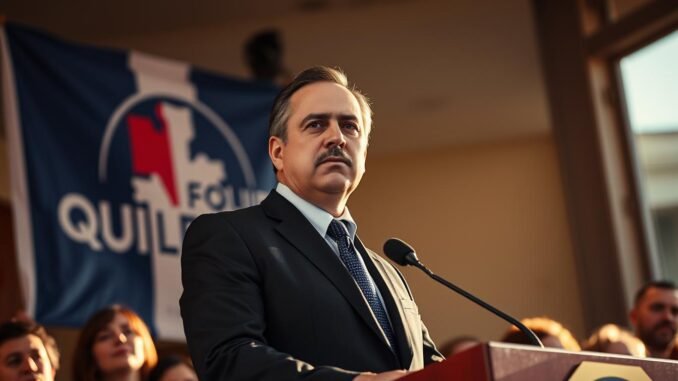

One in five Quebecers doubt politicians after an apology. Yet, a sincere apology can win back undecided voters. This is the situation with Haroun Bouazzi, the Maurice-Richard MNA, returning to Quebec Solidaire. This comes as the party meets in Quebec City ahead of the Jan. 28 parliamentary session start.
After a challenging fall, Bouazzi is back in the spotlight. As a Canadian Muslim leader and human rights advocate, he wants to move forward. He emphasizes the need to focus on policy, not controversy.
He faced criticism for comments on political discourse. Bouazzi later called some of his words “clumsy,” apologized on X, and said the National Assembly is not racist. This stance shows his commitment to diversity advocacy and gives Quebec Solidaire a chance for a fresh start.
His return to the party shows discipline and a move towards governance. For voters in Maurice-Richard, it brings back a voice for social equity. The coming weeks will reveal if his apology, clarity, and hard work can regain trust.
Context: Quebec Solidaire’s Caucus Gathers Ahead of the New Parliamentary Session
The Quebec Solidaire caucus met in Quebec City to plan their next steps. They aimed to focus on key areas like economics, climate, and civil liberties. They also wanted to avoid sending mixed messages.
QS prepares in Quebec City as the session starts Jan. 28
Members arrived early to get ready for the Jan. 28 session. They worked on their briefs, riding plans, and media lines. They discussed how to make a strong impact on health, housing, and civil liberties.
Internal crises and message discipline in 2024
After a tough year, discipline was a big topic. They looked at past mistakes and set rules for talking to the media. They wanted to find a balance between being critical and working together.
Polling stagnation and hopes for a reset
Stagnant polls were a concern, but they were hopeful. They wanted to connect economic issues with rights. They believed in making plans, engaging in Quebec City, and having clear spokespeople to regain attention.
Haroun Bouazzi
After a long absence, haroun bouazzi returned to Quebec Solidaire with a calm demeanor and a clear goal. As the Maurice-Richard MNA, he saw the day as a chance to focus on helping residents and engaging with the community.
Return to caucus after marked absence
His comeback came after a tough time that tested his strength and his family’s patience. He described the period as very challenging but was ready to work. His colleagues, like Gabriel Nadeau-Dubois and Ruba Ghazal, saw his initial words as awkward but later accepted his new stance.
At the National Assembly, the Maurice-Richard MNA concentrated on local issues. He talked about making public transport reliable, making streets safer, and improving health services. He also mentioned schools and community groups that need a dedicated organizer to keep projects alive.
“It is time for everyone to move on”: his message to media
Speaking to the press, he urged for calm and practical actions. “It is time for everyone to move on,” he said, focusing on policy and service delivery. He emphasized the need for empathy and clear goals in public life.
He outlined his future plans around promoting diversity and inclusion. He linked this to everyday needs like housing and youth programs. As a social justice advocate, he promised to regularly meet with neighbourhood leaders and push for transparent decisions.
Impact on his riding of Maurice-Richard and constituents
In Montreal’s north-end, many watched his apology and clarifications closely. His message that the Assembly is not racist helped calm the situation and opened up for talks. Local groups asked for stability and direct support.
He vowed to hold weekly meetings to increase community involvement and amplify residents’ voices in the legislature. By combining policy briefings with listening tours, haroun bouazzi aims to regain trust. He wants to keep diversity and inclusion central to his work as Maurice-Richard MNA.
What Sparked the Controversy: Remarks on “the construction of this Other”
A November speech in Quebec politics sparked controversy. It was about how public words shape our views of others. This led to a big debate in the National Assembly.
November speech at Fondation Club Avenir and ensuing reaction
At Fondation Club Avenir in early November, he talked about how we stereotype minorities. He linked it to politics and media. The video quickly went viral, causing a stir.
His supporters saw it as a stand for human rights. Critics felt it was unfair to colleagues and institutions. The debate over secularism in Quebec grew louder.
Examples he cited, including the Bedford elementary case
He used real-life examples, like the Bedford elementary case in Montreal. It showed how identity and rules can clash. He said these stories highlight how labels can solidify, even when facts are unclear.
He believed these cases strain multiculturalism due to quick judgments. They also show how official actions shape public views on belonging.
Accusations that he labelled fellow MNAs as racist—his denial
After the speech, he was accused of calling fellow MNAs racist. He denied it, saying it was about discourse, not personal attacks. He focused on exclusion mechanisms, not motives.
Despite his denial, the controversy grew. His party faced pressure to respond. The debate over language, intent, and responsibility deepened.
| Trigger | Context | Core Issue | Public Lens | Political Impact |
|---|---|---|---|---|
| Speech at Fondation Club Avenir | Community event focused on newcomers | How the construction of the Other shapes narratives | Viewed through human rights activism | Heightened scrutiny from rivals and media |
| Bedford elementary example | Teacher suspensions in Montreal | Secularism debate and school policy | Questions about multiculturalism and inclusion | Renewed calls to clarify intent and language |
| Online circulation | Video shared on social platforms | Interpretation of critique vs. accusation | Public split over tone and fairness | Pressure for party response and discipline |
Apologies, Clarifications, and Motions in the National Assembly
After heated debate, the focus turned to accountability and process. The discussion covered civil liberties, partisan tactics, and how to engage with critics fairly.
Statements on X acknowledging “clumsy” remarks
He apologized on X, calling some comments “clumsy.” He clarified his intentions and stressed the importance of civil liberties. He saw this as a chance to reset the tone.
Apology to Ministers Christian Dubé and Lionel Carmant
He apologized to Christian Dubé and Lionel Carmant for his radio interview remarks. He showed respect for their roles and acknowledged the impact of words in a charged climate. For a civil rights champion, precision is key.
PLQ and PQ motions affirming the Assembly is not racist; CAQ motion rejected
The National Assembly passed a PLQ and a PQ motion, stating the institution and MNAs are not racist. These motions did not name him but aimed to calm tensions and protect civil liberties. A CAQ motion seeking a retraction and broader apology was rejected.
Premier François Legault’s response and calls for a broader apology
Premier François Legault said the message on X was unclear and called for a wider apology to all MNAs. He believed discussing immigration numbers is legitimate policy work, not an insult. The exchange focused on tone, facts, and the line between critique and respect.
QS Leadership, Strategy Shifts, and Internal Tensions
Leadership changes set the tone inside the party. They aimed to keep their message strong and protect their image. The debate centered on social justice and if QS could be seen as a party of government and a diversity advocate.
Émilise Lessard-Therrien’s resignation and leadership questions
When Émilise Lessard-Therrien left in April, many questioned the party’s direction. The move sparked discussions on unity, campaign strategy, and reaching out to more people.
It also led to a re-evaluation of policy and style. Supporters called for calm, while critics pushed for clearer stances on social justice and strategy.
Gabriel Nadeau-Dubois’ “party of government” push
Gabriel Nadeau-Dubois pushed for QS to be seen as a party of government. He believed in building credibility through discipline, listening, and detailed proposals.
This approach aimed to keep progressive votes while attracting undecided voters. Supporters felt the tone was more realistic without losing the party’s core values.
The Saguenay Declaration and a pragmatic repositioning
The National Council in Jonquière adopted the Saguenay Declaration. It outlined a path for pragmatic gains, combining economic ideas with climate action and civil rights.
Members saw it as a way to balance movement energy with governing details. This balance helped QS be seen as both a builder and a watchdog.
Ruba Ghazal’s election and stance during the flare-up
After the autumn flare-up, Ruba Ghazal was chosen as co-spokesperson. She called for calm and echoed Gabriel Nadeau-Dubois in urging measured debate.
Ghazal’s approach aimed to protect activists while focusing on policy. In public, she portrayed QS as a steady diversity advocate committed to social justice under the Saguenay Declaration’s vision.
Media and Public Reaction: “It was very violent”
The days after the controversy unfolded in waves. TVA Nouvelles and other outlets led the media reaction. Supporters and critics debated every word. The tone hardened online and in person, affecting those closest to him.
Bouazzi’s description of the fallout and mental health toll
Haroun Bouazzi called the backlash “very violent,” affecting his family too. He said the noise made it hard to sleep and focus. His mental health suffered, and he kept working with his team.
Divisions among activists and unease within the caucus
Inside Quebec Solidaire, activists argued over tone and tactics. Some wanted sharper public speaking to defend core values. Others urged restraint. MNAs felt the pressure in their ridings, and a community organizer network tried to cool tempers at local meetings.
Security concerns and calls for calm amid online threats
Riding offices flagged hostile posts and online threats, prompting extra caution. Gabriel Nadeau-Dubois asked for calm and for debates to stay respectful. Staff monitored social platforms and reported incidents, balancing safety with open dialogue.
| Factor | Observed Impact | Response | Public Touchpoints |
|---|---|---|---|
| Media reaction | High visibility and rapid amplification | Clearer briefings and disciplined messaging | TVA Nouvelles segments, press scrums |
| Online threats | Staff stress and security alerts | Incident reporting and police liaison when needed | Riding inboxes, social media monitoring |
| Mental health | Fatigue, sleep disruption, anxiety | Reduced exposure, supportive scheduling | Check-ins with team and family |
| Community organizer input | De-escalation in local forums | Facilitated dialogue and ground rules | Town halls, association meetings |
| Public speaking | Demand for clarity and empathy | Short statements, focus on respect | News conferences, riding events |
Policy Stakes: Immigration, Secularism, and Civil Liberties
Quebec’s debate is about who can come, how they’re welcomed, and their rights. The tone and evidence are as important as the numbers. This shows how policy affects our daily lives.
Debate over temporary immigration and housing pressures
Premier François Legault links the housing crisis to more temporary immigrants. He says there are 600,000 newcomers. Municipal leaders say construction can’t keep up with demand.
Experts suggest planning for labour needs and improving public services. They say this can help without blaming families or students who fill urgent jobs.
Secularism flashpoints and their political resonance
The Bedford elementary case raised questions about secularism in schools. Parents, teachers, and students faced a lot of scrutiny.
Such issues affect politics and how Quebecers view identity and multiculturalism. They call for calm and careful language. They want rules that protect everyone’s rights.
QS motion against scapegoating immigrants for social issues
Québec solidaire supported a motion against blaming immigrants for social problems. They say this is about human rights and evidence-based policies.
Their message is clear: study the data, invest in housing and training, and keep the debate respectful. They aim to balance social cohesion with civil liberties, valuing multiculturalism in the economy.
| Policy Area | Current Pressure Point | Evidence-Based Response | Rights Lens |
|---|---|---|---|
| Housing | Low vacancy rates and rising rents amid the housing crisis | Scale up social and affordable builds; align permits with projected arrivals | Access to shelter framed by civil liberties and equal opportunity |
| Labour | Gaps in health care, construction, and retail filled by temporary immigration | Regional labour forecasts; faster credential recognition | Fair work standards and human rights advocacy |
| Language | Concerns about the vitality of French in mixed urban settings | Free francisation, workplace training, community programs | Inclusive integration that respects civil liberties |
| School and Culture | Secularism disputes that polarize classrooms and parents | Clear protocols for school events; dialogue with communities | Neutral institutions with room for multiculturalism |
Profile and Public Role: human rights activist and community organizer

Haroun Bouazzi’s life is a mix of policy work and personal experience. He speaks from the heart, using his time with immigrant groups and labour allies in Montreal. His approach shapes how he talks about rights, belonging, and politics.
Background as a Tunisian Canadian activist and Canadian Muslim leader
He is known for his work as a Tunisian Canadian activist. He connects with both French and English speakers easily. As a Canadian Muslim leader, he brings a unique perspective to public debates.
He links personal stories to bigger conversations about fairness. This helps people see the importance of equality.
Track record as a civil rights champion and social justice advocate
He is seen as a champion for civil rights, fighting against bias in institutions. As a social justice advocate, he shines a light on issues in housing, education, and work. His work includes policy briefs, roundtables, and quick responses to crises.
Grassroots mobilizer focused on diversity and inclusion
He works to build coalitions with unions, student groups, and cultural centres. His goal is to make diversity and inclusion a part of everyday life, not just a slogan. He supports programs for youth and local leaders.
Public speaking, community engagement, and multiculturalism advocacy
His speeches focus on dignity and equal voice in Quebec’s public life. He works to engage communities through clinics, town halls, and faith-community dialogues. His aim is to create a multiculturalism that reduces harm and opens up opportunities.
- Tunisian Canadian activist networks informing policy input
- Canadian Muslim leader perspectives on rights and belonging
- Civil rights champion tools for reporting and redress
- Social justice advocate partnerships in housing and labour
- Grassroots mobilizer training that centres diversity and inclusion
- Ongoing community engagement across Montreal and Quebec City
What Bouazzi’s Return Means for QS Heading Into the Session
Haroun Bouazzi’s return to Quebec Solidaire is a big chance for the party to come together before January 28. His apologies and explanations help build trust. Leaders like Gabriel Nadeau-Dubois and Ruba Ghazal are calling for calm, helping the party focus its message.
This move is part of a bigger plan for QS to be seen as a serious contender for government. The Saguenay Declaration showed a more practical approach. Now, the party can focus on key issues like housing, public services, and economic help, while keeping its commitment to social justice.
Recent polls have been stagnant, so a fresh start is needed. This means fewer mistakes and clearer words on topics like immigration and secularism. If QS can keep debates based on facts and empathy, it can win over more people.
Inside the party, staying united is as important as the policies themselves. A strong caucus lets candidates speak with one voice and handle tough questions well. This shows stability to supporters and invites a closer look at the party’s ideas.
With Bouazzi back, QS can balance listening to people with taking action. The party can hold listening tours, riding clinics, and share detailed plans. The goal is simple: stay disciplined, show results, and let the QS strategy shine in the Assembly and on the streets.
Conclusion
Haroun Bouazzi’s return to caucus at Quebec Solidaire marks the end of a tough period. He apologized for his words, saying they were “clumsy.” He also made it clear he doesn’t think the National Assembly or its members are racist.
Party leaders are calling for calm as online threats increase. They want to keep the focus on good governance, social justice, and clear messages.
The policy challenges are big. Issues like temporary immigration, housing, and secularism will be key. Bouazzi’s experience in human rights and community work could help the party connect with voters.
For Quebec Solidaire, this is a chance to start fresh and prove they can handle tough times. If they stick to their plan, they can show they’ve grown. Bouazzi’s commitment to civil liberties, inclusion, and multiculturalism could help rebuild trust and support.

Be the first to comment