
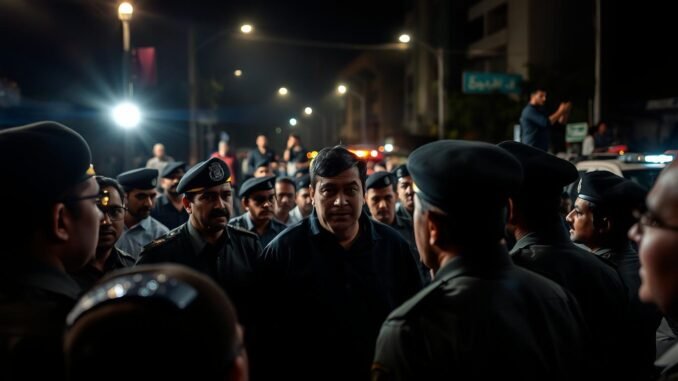

Over 450 police cases have been looked into by Quebec’s Bureau des enquêtes indépendantes. Yet, charges are rare. This is the context of 15-year-old Nooran Rezayi’s death in Longueuil. We start with what’s confirmed, what’s not, and why it matters so much.
Nooran Rezayi’s case began with a 911 call about a group armed in a quiet area. Early reports say only one gun was found, and it was the officer’s. Friends and family claim Nooran was unarmed, carrying books in his backpack.
The BEI is leading the investigation, with director Brigitte Bishop promising fairness. The officer involved is on leave. A community vigil, with family’s consent, shows both grief and determination.
The case has sparked debate on body-worn cameras in Quebec. It mirrors national discussions in Toronto, Vancouver, Alberta, and the RCMP. For many, it’s not just one tragedy. It’s about trust, oversight, and how a 15-year-old’s death tests Quebec’s public safety.
This report will follow the evidence, policies, and personal stories. It will focus on Nooran Rezayi while detailing the official timeline, community reactions, and unanswered questions. It’s a key update for those following the Canada news roundup.
Overview of the Longueuil Police-Involved Shooting in Quebec
The Longueuil incident happened on a quiet Sunday on Montreal’s South Shore. Two patrol cars were called to a suburban street after a 911 call about armed individuals. The Quebec police shooting quickly caught national attention, with many looking for updates on nooran rezayi.
Friends and neighbours described a tense few minutes. They said nooran rezayi stayed while others ran. He showed his hands and carried a backpack with books. One officer fired two shots. The 15 year old shot by police was later identified as Nooran, and the watchdog said the only gun seized belonged to the officer.
What witnesses and early reporting indicate about the incident
Witnesses said there was a short exchange and orders to keep hands visible. Reporters noted that most of the group fled, while nooran rezayi did not. The Quebec police shooting entered headlines across Canada, with people comparing it to other cases sometimes tagged as shooting new west in national roundups.
Investigators confirmed that only one firearm was recovered and that it belonged to the officer. These early details shaped how nooran rezayi latest news travelled and how residents discussed what they saw on that street.
Context: 911 call about a group allegedly armed in a suburban neighbourhood
The response began with a 911 call describing a group allegedly armed in a suburban pocket near schools and parks. Two Longueuil police cars arrived in daylight, and officers issued commands. Coverage emphasized the South Shore setting, adding to the sensitivity around a 15 year old shot by police in a place families know well.
In this context, the Quebec police shooting drew scrutiny from across Montreal and beyond. The Longueuil incident became a touchpoint for parents, teens, and community workers seeking clarity.
Immediate aftermath: Officer on leave and vigil planning
Authorities said the involved officer was placed on indefinite leave and that the service would cooperate with the watchdog. The family retained legal counsel as nooran rezayi latest news continued to update through the week.
Community organizers planned a Saturday vigil at Parc de Mille Fleur in Longueuil with the parents’ permission and police coordination. Images showed youths lighting candles and leaving flowers, underscoring how the Quebec police shooting resonated far beyond the block where it happened.
| Key Element | What Early Reports Describe | Why It Matters |
|---|---|---|
| Initial Call | 911 report of an allegedly armed group in a suburban area | Sets the tone for the police response and urgency |
| Arrival | Two Longueuil police cars respond on Sunday afternoon | Confirms timing and scale of the Longueuil incident |
| Witness Accounts | nooran rezayi stayed, showed hands, carried a backpack | Frames public understanding of the moments before shots |
| Firearm at Scene | Only the officer’s gun was seized by investigators | Shapes early narratives in the Quebec police shooting |
| Aftermath | Officer on leave; family hires a lawyer; vigil organized | Signals accountability steps and community response |
| National Context | Coverage compared alongside shooting new west roundups | Places nooran rezayi latest news within wider Canadian debates |
Quebec’s BEI Investigation and Independence
The BEI Quebec unit investigates when police actions cause serious injury or death. It is the police watchdog in Quebec, Canada. It looks into cases that grab public attention, like the nooran rezayi latest news.
Mandate and role in cases where people are injured or killed
The agency was set up in 2016 to look into critical incidents. It also investigates criminal charges against police officers. This includes sexual assault cases and those involving Indigenous victims.
It does more than just manage the scene and collect evidence. The unit can also act as a criminal investigator. It has started over 450 investigations and arrested 29 officers. It then sends its findings to Quebec’s Crown prosecutors, the DPCP.
Comments from leadership on impartiality
Director Brigitte Bishop spoke at a media briefing. She stressed the agency’s independence from police and government. She said trust comes from being transparent and based on facts.
She asked people not to start their own investigations. Instead, they should share information with the investigators. This is to prevent shadow inquiries from affecting the outcome.
Community mistrust and requests for public cooperation
In Longueuil and Quebec, some people doubt the oversight’s pace and results. Low charge rates add to the skepticism, as seen in the nooran rezayi latest news.
Investigators want witnesses to share videos, timelines, and personal accounts. They say community help is key to ensuring a fair investigation. This supports the independence that BEI Quebec aims for.
What We Know So Far from Watchdog Updates
Early reports have given us some Longueuil police shooting facts. Yet, full investigations are ongoing. The latest updates from the BEI highlight important points and what we can’t know yet. These details are part of the Quebec oversight legal framework.
Only one gun recovered at the scene, belonging to the officer
Only one gun was found at the scene. It was the officer’s service weapon. This is a key part of the Longueuil police shooting facts. It sets the stage for the forensic work that will follow.
Status of interviews with involved officers and right to remain silent
BEI teams have spoken with the involved Longueuil officers. They must attend, but they have the right to remain silent. This is because they could face criminal charges. The officer is on indefinite leave and will cooperate through their lawyer.
Legal framework affecting BEI procedures and evidence
The Quebec oversight legal framework guides how interviews are done and evidence is handled. A 2024 court ruling has also influenced these rules. These rules affect how the BEI works and what evidence can be used.
Key takeaway: documented facts, lawful interviews, and careful evidence controls guide each BEI update as the file advances.
Community Response in Longueuil and Beyond
Grief quickly filled the streets as neighbours came together. They shared stories and supported each other. The Longueuil vigil became a place for students, parents, and elders to remember and reflect. They also called for accountability while showing care.
Memorials, flowers, and youth tributes at the site
Students placed flowers, candles, and notes at the corner. Teens added photos and paper cranes. This turned the spot into a community memorial that grew.
Parents lit candles with their kids. They talked about the nooran rezayi latest news. They shared memories and stood together through the evening.
Saturday vigil organized with family permission and police coordination
The Association de la Sépulture Musulmane au Québec organized a Saturday vigil at Parc de Mille Fleur. They worked with police to keep the vigil peaceful and open for everyone.
Volunteers helped guide the crowd, provided water, and made space for prayers and speeches. The event balanced sadness with determination, honoring the family’s wish for dignity.
Local leaders showing condolences and calling for accountability
Local leaders offered condolences and called for transparency. Luc Rabouin spoke out for body-worn cameras and listening to youth and families. His words received applause.
Speakers made clear calls for accountability from authorities and the BEI. The nooran rezayi latest news highlighted the moment. Legal counsel for the family monitored the situation, urging calm and firm action.
| Aspect of Response | Key Actions | Community Impact | Notable Mentions |
|---|---|---|---|
| Memorials | Flowers, candles, youth notes | Safe space for grief and solidarity | Ongoing community memorial |
| Vigil Organisation | Family permission, police coordination | Orderly turnout and broad access | Association de la Sépulture Musulmane au Québec |
| Leadership Messages | Condolences and policy focus | Renewed discussion on oversight | Luc Rabouin, calls for accountability |
| Public Discourse | Legal representation and updates | Pressure for transparent process | nooran rezayi latest news |
Spotlight on Body-Worn Cameras in Quebec
The nooran rezayi latest news has brought body-worn cameras in Quebec back into the spotlight. Supporters believe clear footage can quickly answer questions. Others worry about the new costs and rules that limit what we can see.
Renewed calls for mandatory bodycams after the shooting
After the Longueuil shooting, families, youth groups, and civil rights advocates called for a provincewide plan. Police unions also pushed for quick adoption, saying recordings protect both officers and citizens. The debate now focuses on privacy and disclosure, and who controls access when emotions are high.
At the National Assembly, Public Security Minister François Bonnardel’s office did not commit to a timeline. The province is studying video use in courtrooms and managing the cost of police bodycams across different services.
Lessons from Montreal’s 2016–2017 pilot and cost concerns
The Montreal bodycam pilot from 2016–2017 equipped 78 officers and tracked encounters for a year. The report found little change in use of force and questioned the value for money. The costs for hardware, storage, redaction, and training were estimated in the tens of millions.
At City Hall, the administration of Valérie Plante voted down a 2024 motion to rush a rollout. They said they need a stronger legal framework. Projet Montréal’s Luc Rabouin said the city could proceed once Quebec sets clear rules.
Privacy, access to footage, and courtroom challenges
Scholars like Étienne Charbonneau at ÉNAP say cameras rarely change officer behaviour enough to justify the cost. Public support drops when taxpayers see the real cost of police bodycams and the strain on IT systems. Activist Alexandre Popovic warns about mass surveillance if policies are weak.
Courts face heavy workloads to review and transcribe hours of footage. Privacy and disclosure laws restrict what can be released to families and media, and redaction can delay files for weeks. These hurdles shape expectations about how quickly answers arrive after a crisis.
| Issue | What Quebec Faces | Key Stakeholders | Practical Impact |
|---|---|---|---|
| Adoption Pressure | Renewed calls tied to the nooran rezayi latest news and other incidents | Families, community groups, police unions | Momentum for mandatory body-worn cameras Quebec policies |
| Evidence from Pilots | Montreal bodycam pilot 2016–2017 showed limited force reduction | SPVM, City of Montreal, ÉNAP researchers | Weighing benefits against the cost of police bodycams |
| Financial Load | Capital, storage, redaction, training in the tens of millions | Municipal councils, Treasury Board, vendors | Tax impacts and long-term maintenance commitments |
| Privacy and Disclosure | Strict rules limit release and require heavy redaction | Access to information commissions, prosecutors | Slower public access and contested expectations |
| Courtroom Use | Large volumes of video strain dockets and staff time | Judges, Crown, defence counsel | Longer timelines to analyze and present evidence |
| Policy Direction | Province studying frameworks; cities awaiting guidance | Ministry of Public Security, municipalities | Staged rollouts linked to clear standards and funding |
How Other Canadian Police Services Use Bodycams

Across Canada, police services have adopted bodycams in different ways. This has led to debates in Quebec about their use. The methods vary from full deployments to pilots, influenced by training, privacy, and funding.
Toronto’s rollout and Vancouver’s pilot project
In 2020, Toronto Police started using bodycams on all frontline officers. They received training on how to use them and handle evidence. The cameras were chosen for their durability and ability to keep records.
In British Columbia, Vancouver started a bodycam pilot in 2024 with 85 officers. The focus is on incidents involving force, public complaints, and how long to keep the footage.
Alberta’s provincewide plan and Calgary’s adoption
Alberta made bodycams mandatory in March 2023. This aims to have the same rules for all police in the province. The rules cover how to store, edit, and review the footage.
Calgary was the first in Alberta to use bodycams in 2019. All frontline officers were equipped. They also received training on how to handle situations and document stops.
RCMP national deployment timeline and goals
The RCMP started using bodycams in November 2024. They aim to have over 10,000 cameras in use within 12 to 18 months. They will use a national platform to manage the evidence.
The RCMP wants to be more transparent in critical situations. They also aim to have clear records for court and the same standards everywhere.
| Jurisdiction | Program Phase | Start Year | Scope | Operational Focus |
|---|---|---|---|---|
| Toronto Police Service | Service‑wide rollout | 2020 | Frontline officers citywide | Activation compliance, disclosure readiness |
| Vancouver Police Department | Pilot | 2024 | 85 officers | Use‑of‑force review, public complaint response |
| Alberta (provincewide) | Policy mandate | 2023 announcement | Municipal and provincial services | Unified standards, retention and redaction |
| Calgary Police Service | Full adoption | 2019 | All frontline officers | De‑escalation coaching, stop documentation |
| Royal Canadian Mounted Police | National deployment | 2024–2026 | 10,000+ cameras planned | Rural‑urban consistency, evidence management |
Nooran Rezayi
Nooran Rezayi is a 15-year-old student from Longueuil. His name is now at the centre of a growing public conversation. Family and friends describe him as a teen with a backpack and school books, going about his day with classmates.
For those looking for nooran rezayi bio or nooran rezayi biography, his youth, studies, and the grief that followed are key.
Community vigils have placed flowers, handwritten notes, and photos near the scene. Classmates say school corridors feel different now. For those following nooran rezayi latest news, updates on the investigation and the family’s journey are important.
Some online posts call him a nooran rezayi artist. But reports focus on his identity as a student on the night in question. The family has legal counsel and is working with the BEI, seeking answers.
References to nooran rezayi bio and nooran rezayi biography should highlight his young life, his school community, and the quest for truth.
Tributes continue, and nooran rezayi latest news will share updates and memorial plans. Nooran Rezayi remains at the centre of these stories, with a focus on verified facts and personal memories.
Timeline and Key Details of the Longueuil Incident
The Longueuil shooting started on a quiet Sunday afternoon. A 911 call reported a group armed in a suburban area. Teens ran when police arrived, but one stayed by the curb with a backpack.
Arrival of two police cars, orders given, and shots fired
Two police cars with four officers arrived quickly. They told everyone to stay put and show their hands. One officer fired two shots, and a 15-year-old was killed soon after.
Claims that Nooran complied and was unarmed with a backpack
Friends say Nooran followed the police orders and didn’t run. His family says he was unarmed and had books in his backpack. Only the officer’s gun was found at the scene, a key part of the investigation.
Placement of involved officer on indefinite leave
The involved officer is now on indefinite leave. They are working with the BEI. A vigil at Parc de Mille Fleur is set for Saturday. The latest news on Nooran Rezayi continues to unfold.
Patterns, Oversight, and Charge Rates in Quebec
Quebec’s oversight record sparks debate on police accountability. The Bureau des enquêtes indépendantes (BEI) releases files. Quebec DPCP decisions mark the legal end.
People watch these outcomes to grasp BEI charge rates. They also want to know how force is judged in deadly police shootings.
Numbers tell part of the story, but they also spark questions that communities keep asking.
BEI’s record: 450+ investigations with few charges
Over 450 investigations by the BEI have happened. Yet, only two have led to charges. None were high-profile fatal shootings.
These charge rates shape views on police accountability in Quebec. They also influence how cases move through Quebec DPCP decisions.
Deadly shooting cases and prosecutors’ “reasonable and necessary” findings
In 52 deadly police shootings in Quebec, no criminal charges have been laid. Eight files are open or before prosecutors. The DPCP often says officers acted “reasonably and necessary under the circumstances.”
Staffing composition and concerns about effectiveness
The BEI has 45 investigators as of April. This includes 22 former police officers. Former officers can’t lead cases tied to their past employers.
Critics, like scholar Tari Ajadi, say this risks a culture of deference. They believe it can weaken effectiveness.
The bureau has also arrested 29 officers in separate criminal probes, like sexual assault allegations. While it shows its dual role, some argue it doesn’t address public concerns about use-of-force files and police accountability in Quebec.
Longueuil Policing Context and Community Policing Debates
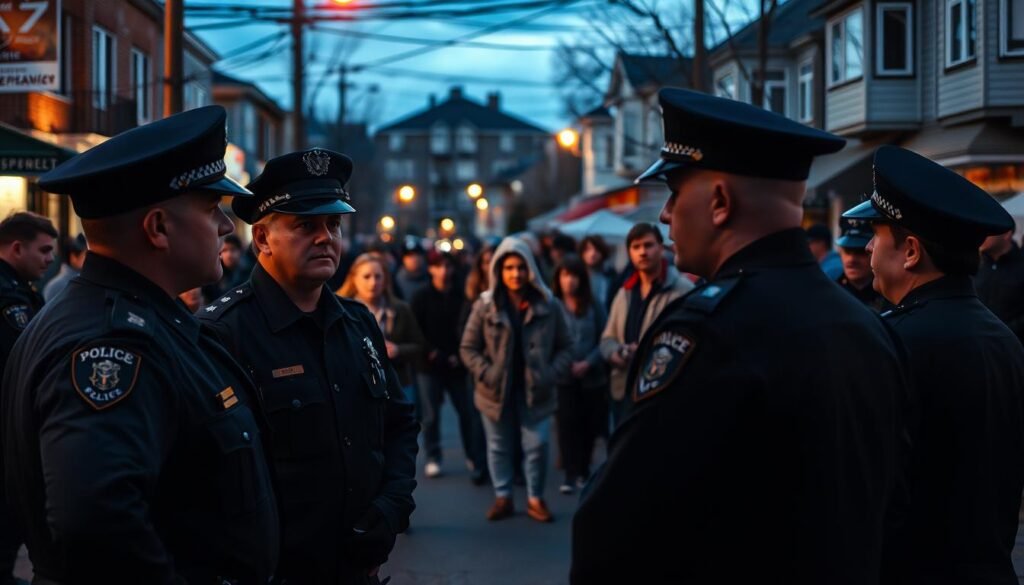
Residents in Longueuil are looking for a balance between outreach and enforcement. The Longueuil RÉSO program and the province’s anti-gun operation Longueuil are key in daily interactions. Racial profiling street checks are also a big issue, highlighted by recent news.
RÉSO community policing program and media attention
The Longueuil RÉSO program was started by Fady Dagher with provincial funding. It had officers work with social agencies for six weeks without uniforms or guns. The goal was to build trust and learn from schools, shelters, and youth centres.
Radio‑Canada’s series Police Avant‑Gardiste brought attention to this shift. Supporters say it put service before force and gave neighbours a voice. Critics, though, say the promise is not even across all boroughs.
Anti‑gun operations, street checks, and racial disparities
At the same time, a provincewide push against firearms boosted resources for the anti-gun operation Longueuil. Officers increased patrols near parks, transit hubs, and late-night corridors.
Street checks rose, with most tied to firearm interdiction. Community groups pointed out racial disparities. Black and Arab residents reported being stopped more often than white residents, seen as racial profiling.
Allegations of prior harassment raised by friends
Friends of Nooran Rezayi talk about repeated stops, sudden ticketing, and hostile language. They say the same officer focused on their circle for months, causing fear and resentment.
These allegations challenge the Longueuil RÉSO program’s goals and the image promoted through Police Avant-Gardiste. Residents question how prevention and constant checks can coexist.
Across neighbourhoods, people want clarity on success. They want fewer guns, fewer racial profiling street checks, and stronger community ties. The anti-gun operation Longueuil and community-first policing are judged by fairness in daily life.
Conclusion
The death of 15-year-old Nooran Rezayi has caused deep sadness and raised important questions about Quebec police oversight. The facts are clear: the BEI investigation found only the officer’s gun at the scene. The officer is now on indefinite leave.
A vigil, held with the family’s consent, showed the community’s strong support in Longueuil. It was a moment of sorrow and determination. People are demanding clear answers, timely updates, and a way to rebuild trust.
The BEI investigation is ongoing, but its legal setup has raised public doubts. Over 450 investigations have led to few charges in deadly shootings. Advocates are pushing for body-worn cameras in Quebec, like those in Toronto and Vancouver.
Costs, privacy, and rules about evidence are holding back the use of these cameras. Yet, the push for them is growing. People want reliable records of important moments.
Longueuil’s identity adds to the tension. The city is known for its RÉSO program but also for its anti-gun efforts and street checks. These actions have sparked debates about reform and fairness.
For many, the latest news about Nooran Rezayi is not just about one case. It’s about whether policies are truly effective. The city and the family are looking for justice and change.
Prosecutors are waiting for all the files to make decisions. The focus is on finding the truth, being accountable, and healing. Nooran Rezayi’s name has become a symbol for better police oversight and community support in Longueuil.
What happens next will test the institutions. It will also support a family and a city seeking justice and a fair way forward.

Be the first to comment