
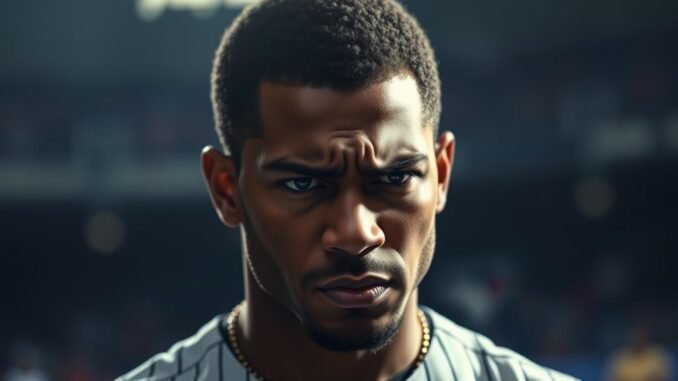

Seven of the last ten World Series winners have won extra-inning games in October. On Tuesday, Toronto faced the opposite side of that. In a tense Blue Jays Game 7, a key moment in the ninth inning led to a 5-4 loss to the Los Angeles Dodgers. Isiah Kiner-Falefa, known for his defence and speed, became a hot topic in minutes.
Kiner-Falefa was pinch-running for Bo Bichette. He broke on a grounder to second baseman Miguel Rojas and was caught at the plate by Will Smith. The Dodgers won in the 11th inning, ending Toronto’s hopes. Canadian fans saw their season end on a narrow margin.
As news of Kiner-Falefa spread, the play was replayed everywhere. It sparked debates on judgement, coaching, and risk. He explained he was told to stay close to third to avoid a double play. But this detail was overshadowed by the intense reactions.
This moment, and a few missed chances, defined Blue Jays Game 7. The harshest reactions overlooked the complexity of a split-second decision and a heartbreaking loss.
What happened in Game 7: the pivotnal ninth-inning play and aftermath
The air in Toronto was electric. The Dodgers vs Blue Jays game was intense. Every detail was critical.
The situation: bases loaded, one out, infield in, tie on the line
It was the bottom of the ninth. The bases were loaded, one out, and the infield was drawn in. The tie was on the line, and isiah kiner-falefa baseball was just 90 feet away from a walk-off. The crowd was on their feet as the pitch came home.
The grounder to second and the bang-bang force at home
Daulton Varsho hit a one-hopper to second. Miguel Rojas juggled it, then threw. The runner was forced out at home.
Will Smith caught the throw and planted his foot. The runner was just a half-step away.
Replay, crowd reaction, and confirmation of the out call
The first replay sparked a loud reaction. Many thought the runner beat the tag by a fraction of a second. After review, the call stood.
This moment showed how small margins decide games in the Game 7 World Series.
How the Dodgers won it in the 11th on Will Smith’s home run
Extras brought even more tension. In the 11th, the Dodgers found their winning swing. Will Smith’s home run gave them a 5–4 lead, securing the title.
This win ended a tense Dodgers vs Blue Jays game, built on small margins and determination.
Blue Jays’ missed opportunities that shaped the series outcome
For six tense innings in Game 7, Toronto had the upper hand and seemed ready to win. Yet, a series of missed chances against the Los Angeles bullpen haunted them. Every quiet inning felt like a missed chance, adding to the tension.
Toronto’s lead for six innings and late-inning swings
They held a slim lead into the late innings, but their bats went cold. The Dodgers hit late-inning homers, turning the game around. Each swing took away Toronto’s control, shifting the momentum.
Runners left on base and the 3-for-14 with RISP in Game 7
Toronto left 10 runners on base and went 3-for-14 with runners in scoring position. This was a far cry from their October success. Three chances for a walk-off were missed, highlighting missed opportunities.
Addison Barger doubled off to end Game 6 and other turning points
Missed chances weren’t just in Game 7. In Game 6, Addison Barger was doubled off, extending the series. In Game 7, Miguel Rojas tied it in the ninth, and the Dodgers hit more late-inning homers. These moments showed how close the game was.
- Blue Jays missed chances across Games 6 and 7 narrowed their cushion.
- Production with runners in scoring position swung from strength to strain.
- A few swings and one baserunning read stood out as World Series turning points.
Isiah Kiner-Falefa
The stadium was silent before the game started. Isiah Kiner-Falefa took a small step off third base. He was ready for the ball, his eyes fixed on the pitcher.
In that moment, baseball was all about his nerves, his quick thinking, and his determination. He was trying to find a way to the plate.
Why his run mattered most in the moment
This was Toronto’s last chance to win a title in 30 years. The infield was set up to catch him, but he was determined to succeed. His jump and path were key.
One touch of the plate could change everything. He had to beat the throw or the inning would end quickly. For Isiah, the choice was clear.
The half-step margin at the plate
The throw from Miguel Rojas met Will Smith at home, and the tag stayed firm. The half-step at home decided the scene, with Smith maintaining contact as the slide cut across the front edge. Replays stretched seconds into minutes, and October margins felt like miles.
In isiah kiner-falefa baseball, a foot becomes a frame, and a frame becomes fate. The difference between safe and out sat on the blade of a single stride.
How inches define October baseball
Plays like this sharpen how fans, coaches, and players see the basepaths. Aggressive reads press pressure points; conservative leads guard against disaster. In October margins, the risk lives beside the reward, and both are measured in inches.
That razor line is why clutch baserunning draws focus when everything tightens. For Isiah Kiner-Falefa, the outcome turned on a breath, a toe, and that half-step at home.
| Factor | Aggressive Read | Conservative Lead | Impact on October Margins |
|---|---|---|---|
| Primary Goal | Score on contact | Avoid double play | Sets the ceiling vs. floor of the inning |
| Timing Window | Frames at the plate | Extra step to retreat | Defines the half-step at home |
| Defence Response | Faster release to home | Chance to turn two | Shifts pressure between fielders |
| Runner Skill | Explosive first move | Disciplined footwork | Amplifies clutch baserunning value |
| Outcome Variance | High reward, visible risk | Lower peak, safer floor | Where isiah kiner-falefa baseball lives in October |
Coaching directives and baserunning fundamentals under scrutiny
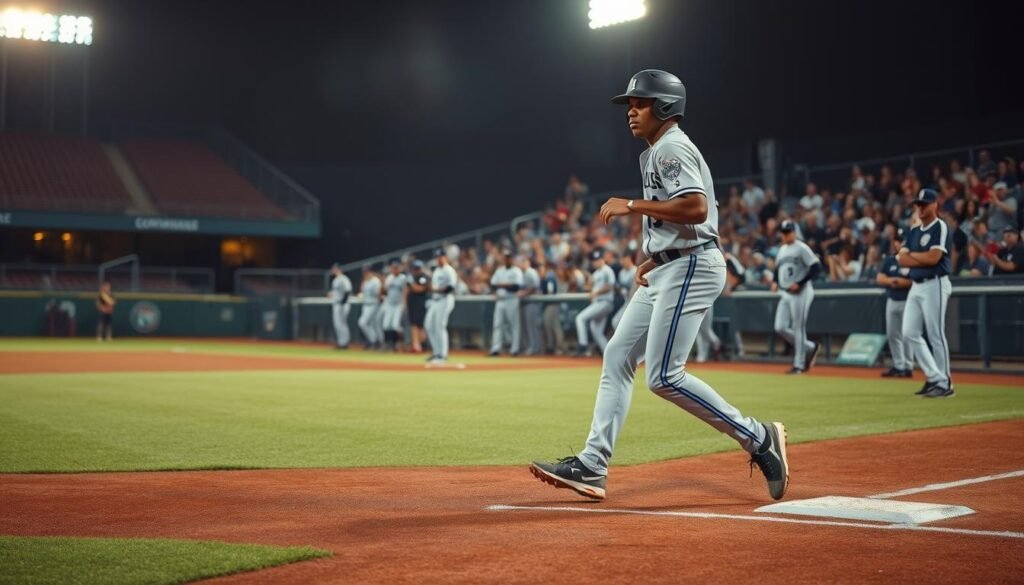
In tight spots, the Blue Jays relied on baserunning and situational reads. They followed third-base coach advice, being cautious with the infield in. The goal was to respect the defence, avoid an easy out, and wait for the next chance to hit.
“Stay close to the base”: the Blue Jays’ third-base lead philosophy
Toronto aimed for short leads, trusting contact over risk. With Max Muncy and Will Smith ready, the third-base coach advised caution. This approach ensured a quick out if the ball was fielded cleanly.
The Blue Jays also showed defensive awareness across the field. Daulton Varsho’s hard hit could lead to a double play. A shorter lead reduced this risk, keeping the game alive.
Avoiding back-picks and line-drive double plays with short leads
Short leads protect against catcher tags. Smith’s quick tags made back-picks a threat. Runners were told to stay calm, lean back, and react late.
Coaches focused on defence first. They aimed to limit the worst-case scenario and trust the next hitter. A soft grounder with the infield in could lead to a tag, but a balanced start gave the runner options.
How similar leads by Daulton Varsho and Ernie Clement support the approach
Game tape and Statcast data backed this strategy. Daulton Varsho and Ernie Clement’s leads were similar, showing the Blue Jays’ approach. These choices reflected the team’s defensive focus in October.
These examples highlight the team’s focus on avoiding double plays and respecting the Dodgers’ defence. They kept their choices narrow, even under pressure.
| Runner | Game | Primary Lead (ft) | Infield Alignment | Key Risk Managed | Coaching Intent |
|---|---|---|---|---|---|
| Daulton Varsho | Game 1 | 8.5 | Infield in | Line-drive double play | Stay close to third to react and avoid a trap |
| Ernie Clement | Game 1 | 5.7 | Infield in | Back-pick by catcher | Short, balanced lead for quick retreat or break |
| Isiah Kiner-Falefa | Game 7 | Conservative | Infield in | Force-out timing at the plate | Follow baserunning fundamentals and staff cues |
Statcast context: primary leads, comparisons, and what the numbers say
Numbers make the debate clear. Every foot counts when the infield is in. But, there’s a risk in going too far. Baseball stats show the balance between speed and safety.
Statcast primary lead figures help judge third base choices. They add depth to isiah kiner-falefa stats by comparing one moment to many others.
Kiner-Falefa’s 7.8-foot primary lead ranked 357 of 381 in the World Series
The tracked distance was 7.8 feet on the key play. This ranked 357th out of 381 in the series. It shows a cautious approach, avoiding back-picks and double plays.
This choice fits isiah kiner-falefa’s stats. It shows a careful balance between speed and safety, based on coaching and the game’s state.
Comparing Mookie Betts’ 11.6-foot lead on a similar play
Mookie Betts took a bigger jump the next inning. Yet, he was forced out at the plate on a clean grounder. This shows that even big leads can’t guarantee a run.
This example, along with Statcast data, highlights the importance of fielding and ball speed. A few extra feet can help, but the outcome depends more on the ball’s contact.
Risk-reward math when the infield is in
When defenders get closer, baserunning changes. A longer lead might shave seconds off the time to home. But, it also increases the chance of a quick throw or double play.
Coaches often choose safety over speed. The Statcast data and Mookie Betts’ example show how close the margins were in that moment.
Player and insider reactions that reframed the narrative
During Game 7, many veteran voices and insider notes changed how we saw the play. They showed it was just normal, not a big deal. The isiah kiner-falefa news thread grew as players and reporters explained what runners do when the force is at home.
Justin Turner’s “by the book” defence on X
Justin Turner explained on X what players do every day. When a force is at the plate, runners try to avoid a double play. This keeps the game going for the next batter.
Turner also said that sometimes, players slide even if it’s a bit slower. This is because of what coaches teach them.
Jeff Passan’s report on third base coach Carlos Febles’ instructions
A report by Jeff Passan said third base coach Carlos Febles told the runner not to take an extra step. This advice is for when the infield is close. It shows the runner followed the coach’s sign, not hesitated.
Whit Merrifield’s explanation of leads with a force at home
Whit Merrifield explained a simple rule: match the lead to the third baseman’s distance. Then, react on contact. For a force play, staying close is key to avoid a back-pick.
Together, the Justin Turner X post, the Jeff Passan report, and coaching details on Carlos Febles formed a picture of process over panic, while the Whit Merrifield analysis rooted the moment in everyday fundamentals.
The human cost: online abuse, threats, and athlete well-being
After Toronto’s Game 7 loss, the focus turned from the game to the people. The Canadian sports community saw a usual postgame reaction turn into a storm. The line between passion and harm was quickly crossed, showing the dark side of online abuse in sports.
Vitriolic messages after the loss and safety concerns
Sportsnet reporter Ben Nicholson-Smith shared that Isiah Kiner-Falefa faced harsh messages and threats after Game 7. These included violent language. He explained that he followed the plan but acknowledged the harsh reactions.
These incidents raised big questions about athlete safety and the role of platforms. When fans cross the line, families and teammates suffer too. Teams must provide support and security to help.
The mental toll of being a scapegoat in a winner-take-all loss
Being blamed after a big loss is tough. Even good decisions can seem wrong in slow motion. This fuels online abuse and affects confidence, sleep, and focus.
Players are trained for pressure, not for facing doxxing or threats. The cost of being blamed builds over time. It changes how athletes and their families interact with the sports community.
Team and league responsibility to curb harassment
Clubs and leagues have a duty of care. They must have clear reporting channels, act quickly on requests, and offer mental health resources. Education campaigns can also set clear expectations for fan behaviour.
When strategy is shared, accountability must follow. Clear safety protocols and accountability help protect athletes. They keep the conversation within the game’s boundaries.
| Focus Area | Current Challenge | Practical Response | Intended Outcome |
|---|---|---|---|
| Digital Monitoring | Spike in threats after Game 7 and targeted pile-ons | Round-the-clock moderation and direct escalation to platforms | Faster removal of abuse and reduced harm to players |
| Security Support | Heightened safety risks for athletes and families | Event escorts, home-risk assessments, and liaison with local police | Visible, immediate protection and improved athlete safety |
| Mental Health | Scapegoating after a winner-take-all loss | On-call counselling, peer support, and privacy shields | Lower stress load and quicker psychological recovery |
| Fan Education | Escalating fan behaviour in heated moments | Pre- and postgame messages, arena prompts, and social campaigns | Healthier norms within the Canadian sports community |
Roundup of blame, accountability, and perspective across the series
The search for fault in the World Series is ongoing. Every pitch, swing, and decision is weighed equally. This is what accountability in sports is all about.
Hoffman’s late-inning homers allowed and his postgame remorse
Relief innings turned on a few swings. Jeff Hoffman allowed dagger home runs late, including the ninth-inning blast by Miguel Rojas. This changed the game’s pulse.
A Jeff Hoffman quote followed in the clubhouse: “I cost everybody in here a World Series ring.” His words showed how thin the margins were. A single pitch can flip a World Series narrative.
Varsho’s ground ball versus a fly ball outcome
The Daulton Varsho grounder in the ninth offered the defence a quick force at home. A fly ball might have changed the game. Instead, the ball stayed on the dirt, and the play collapsed the lane to the plate.
These contrasts belong in a broader series perspective. Toronto’s bats left traffic everywhere. The contact type in that spot framed the inning’s fate as much as the baserunner’s jump.
Why single-moment blame oversimplifies Game 7
Across two nights, the Blue Jays stranded chances and watched late homers swing momentum. In Game 6, Addison Barger was doubled off to end it; in Game 7, they went 3-for-14 with runners in scoring position and left 10 on base.
Fold those beats into the World Series narrative and the picture sharpens. Accountability in sports widens to the bullpen, the bats, and the baserunning tree. A single snapshot can’t hold the entire series perspective.
| Moment | Impact on Win Probability | Primary Actor | Context | Takeaway |
|---|---|---|---|---|
| Ninth-inning homer allowed | Large negative swing late | Jeff Hoffman | Tie game, high leverage | Pitch execution shifts the World Series narrative |
| Ninth-inning Daulton Varsho grounder | Force at home enabled | Daulton Varsho | Infield in, bases loaded | Ball on the ground compresses options |
| RISP inefficiency (3-for-14) | Runs left on the table | Toronto lineup | Multiple innings with traffic | Missed chances compound across frames |
| Game 6 double-off | Immediate game end | Addison Barger | Two-out baserunning lapse | Small reads carry outsized cost |
| Baserunning lead at third | Half-step margin at the plate | Isiah Kiner-Falefa | Force at home scenario | One detail among many decisive moments |
Isiah Kiner-Falefa bio and role: versatile athlete, defensive skills, and position
In Toronto’s playoff run, Isiah Kiner-Falefa played a key role. He’s a versatile athlete known for making smart decisions under pressure. His bio highlights his speed, awareness, and steady hands, making him a valuable asset on the field.
Utility profile, primary position usage, and defensive reputation
His game is built on quick reads and calm movements. The isiah kiner-falefa position has changed with the team’s needs. But his core skills remain the same: sharp defensive skills and quick reflexes.
Coaches trust him to play third, short, or second without issues. This reliability started when he became a regular for the Texas Rangers.
Pinch-running for Bo Bichette and late-game responsibilities
In Game 7, he ran for Bo Bichette, showing his athletic ability. This move showed the team’s trust in him. He’s good at reading pitchers, taking clean turns, and staying alert.
Toronto’s staff has counted on him in critical moments all season. He brings energy without taking unnecessary risks, keeping the team’s chances high.
How his Rangers shortstop experience shaped his baseball IQ
His time as a Rangers shortstop improved his timing. He learned angles and probabilities from deep in the hole. These experiences enhanced his skills, from tags at second to charges on bunts.
His past experience guides his decisions today. It shows in his positioning, first-step reads, and the quiet details that make him stand out defensively.
Isiah Kiner-Falefa stats, highlights, and achievements in context
In the heat of October, clarity is key. Isiah Kiner-Falefa’s stats give us a clear picture. His baseball stats show how roles impact his performance. He’s known for solid defence and timely hitting, not just noise.
This perspective helps us understand his achievements and highlights fairly.
Postseason line with Toronto and small-sample caveats
With Toronto in the 2025 playoffs, he played in 15 games. He hit .162/.184/.216 with two doubles and two RBIs. This shows how small samples can affect batting averages.
Pitch-to-pitch variance and role-specific usage are key. His defence, pinch-running, and matchup spots often showed quiet value.
Career trends and moments across seasons
Throughout his career, he focused on making contact. His batting average changed with his role and location. But his ball-in-play skills remained consistent.
This approach led to moments that felt like a breakout season. Yet, it didn’t change who he is.
Glove-first reliability and situational hitting define him. When he hits the ball well, his stats improve. His game management skills remain steady.
Notable highlights from Texas and beyond
With the Texas Rangers, he played shortstop and third base. He made impressive plays, including clean picks and rangy plays. These moments show why managers trust him late.
In Toronto, he added to his achievements with quick tags and hit-and-run plays. His résumé is a mix of utility, IQ, and adaptability. His stats reflect the job he’s been given.
What’s next: isiah kiner-falefa news, free agency outlook, and fan sentiment in Canada
Winter is here, and the isiah kiner-falefa news is changing. He’s a player that teams trust in tight games. In Canada, people talk about his numbers, role, and value.
Pending free agent status and possible market fit
He’s a free agent after returning to Toronto on August 31, 2025. Teams looking for defensive skills will consider him. His ability to play late in games makes him a good fit for depth roles.
Teams will compare him with other infielders. They’ll look at his glove work and speed. The focus is on fit, not just his skills.
How the Game 7 discourse may affect his next contract
The ninth-inning play is part of his story, but not all of it. Clubs will look at his coaching and baserunning. They’ll value his situational skills.
Short-term deals with bonuses are possible. A team needing defence might sign him early. The buzz around him should stay steady, not spike.
Fan perceptions, isiah kiner-falefa jersey chatter, and Canadian market dynamics
Fans in Canada have mixed views. Some value process over outcome. Others focus on the half-step at the plate.
Support for him grows as the season goes on. The talk about his jersey shows both sides. The Canadian market is interested, but cautious.
| Scenario | Likely Contract Shape | Primary Role | Market Driver | Fan Sentiment Snapshot |
|---|---|---|---|---|
| Early signing with contender | 1 year + option, performance bonuses | Utility INF/OF, late-inning defence and speed | Roster flexibility, playoff planning | Cautious optimism; steady isiah kiner-falefa jersey interest |
| Mid-winter value deal | 1-year guarantee, non-roster spring invite possible | Bench specialist, matchup usage | Cap space, depth after injuries | Mixed fan sentiment; outcome-dependent buzz |
| Reunion with prior club | Short term with defensive incentives | Infield rotation, clubhouse stabiliser | texas rangers links if depth thin | Nostalgic interest; measured expectations |
| Late-offseason signing | Veteran minimum with escalators | Competition role into Opening Day | Market timing, remaining needs | Quiet until April; spikes with isiah kiner-falefa news |
Bottom line for readers in Canada: the market will weigh fit, price, and role more than one moment, while the discourse keeps shaping how fans talk about the player—and the jersey.
Conclusion
Blue Jays Game 7 was a nail-biter, with moments that made October unforgettable. Isiah Kiner-Falefa’s dash home was a key moment. Yet, the real story is bigger. Coaching, risk-taking, and data all played parts.
In Canadian baseball, the outcome often depends on quick decisions and small margins. The Dodgers took advantage of their chance, but Toronto had many opportunities too. Ten runners left on base and a 3-for-14 batting average with runners in scoring position told a tough tale.
Late home runs and a double-off in Game 6 set the stage for the final play. Each moment added up, making Game 7 a sum of small losses, not just one mistake.
Isiah Kiner-Falefa now faces free agency with unwanted attention. His decision at the plate was part of a strategy taught in many clubs. In a game of inches, it’s easy to blame but hard to find balance.
Canadian baseball fans know this well: heroes and heartbreak come from the same narrow path. The fairest view focuses on the process and execution. Toronto’s staff relied on probabilities, and players followed the plan.
The outcome was decided by small margins. As the team looks to the future, remember how these margins shape legacies. Isiah Kiner-Falefa and his teammates were judged by a game that values precision over stories.

Be the first to comment