
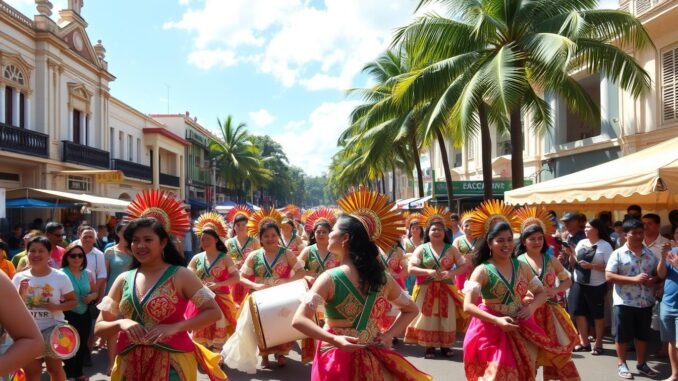

In just one year, a small parade grew into a big event, drawing thousands to Fraser Street. This shows how strong Filipino heritage is in Vancouver. Over 174,000 Filipino Canadians live in British Columbia.
The festival honours Lapu-Lapu, a Visayan warrior who fought against colonization. It began in 2023 on Joyce Street and Collingwood Street. Now, it’s a key part of Vancouver’s Street Festival, filled with food, music, and colours.
Families, vendors, and volunteers fill the streets with music and dance. It’s a mix of joy and determination, showing community spirit. The festival is a highlight in Vancouver and a celebration of Filipino culture.
In April 2025, a tragic attack took 11 lives and hurt many. The Lapu Lapu Festival now honours both joy and remembrance. It invites everyone to learn about its history, Vancouver’s response, and the power of culture.
What Makes Vancouver’s Lapu-Lapu Day a Cultural Touchstone
Every spring, Vancouver comes together to celebrate Lapu-Lapu Day. It’s a time to connect with our roots and celebrate Filipino culture. The event is filled with food, dance, and stories, making it a special day for the community.
Honouring lapu-lapu: courage, resistance, and renewal
Lapu-Lapu is a hero from the Visayas known for his bravery. His story inspires us to protect our communities and traditions. The festival is a time of renewal, filled with music, prayer, and pride.
From small parade to full-day celebration with food, music, and dance
In 2023, the parade started small on Joyce and Collingwood Streets. But it quickly grew into a big celebration on Fraser Street. Food trucks, live music, and traditional dances drew people from all over.
The festival got even bigger, with more colors and vendors. Families enjoyed the day, making it feel like a neighborhood fair. It became a beloved part of Vancouver’s street festival tradition.
Why Filipino heritage matters in the Lower Mainland
British Columbia has over 174,000 people of Filipino descent. Lapu-Lapu Day helps them feel seen and valued. It shows young people that their culture is important in Canada.
For both the young and old, Lapu-Lapu Day is a chance to connect. They share stories, language, and traditions. It’s a celebration of Filipino heritage, where culture comes alive.
Lapu Lapu Festival
This neighbourhood celebration started in 2023 and quickly became a hit. People can hear the festival before they see it. It now fills Fraser Street with colour and delicious smells.
How the festival began in 2023 and grew across Fraser Street
It began with a simple walk and grew into a big event. Thousands joined in, block by block. Community leaders and businesses worked together, adding stages and safety measures.
This shows how Filipino events in Vancouver can grow. Neighbours coming together makes the streets welcoming.
Sights, sounds, and flavours: food trucks, tinikling, and bright colours
Visitors can hear the festival before they arrive. Food trucks offer tasty treats, and dance leaders get everyone moving. The festival is filled with bright colours and lively sounds.
Community spirit: families, vendors, volunteers, and shared joy
Families, couples, and volunteers all join in. Vendors know their regulars, and applause follows each performance. This festival is a celebration of pride and joy, unique among Vancouver’s events.
| Aspect | What Visitors Experience | Community Impact | Festival Context |
|---|---|---|---|
| Origins | Launched in 2023 with a small parade | Local groups gained visibility | Scaled into a Fraser Street festival |
| Music & Dance | Live anthems and spontaneous group moves | Youth arts leadership on display | Signature sets including tinikling Vancouver |
| Food | Food trucks serving lumpia, barbecue, halo‑halo | Sales boost for neighbourhood vendors | Distinct flavour lane within the vancouver festival scene |
| Decor | Bright streamers, flags, and sampaguita garlands | Shared pride along the corridor | Iconic look of the Lapu Lapu Festival |
| People | Families, couples, performers, volunteers | Mingling without competition, steady applause | Model for inclusive filipino events vancouver |
The Vancouver Street Festival Tragedy: What Happened and Why It Matters
On April 26, 2025, a block near Fraser Street and 41st Avenue turned from joy to fear in seconds. An SUV crashed through the vancouver street festival. The vancouver festival attack left families searching for loved ones and the city holding its breath.
The scene showed chaos and care. People guided others to safety, while a few ran toward the impact. In the shadow of a vancouver attack, small acts of courage stood out.
Overview of the vehicle-ramming on April 26 and immediate response
Witnesses described a black SUV moving fast through festival-goers near the main stage and food trucks. Calls to 911 flooded in. Within minutes, paramedics, firefighters, and police arrived and set up a triage zone on Fraser Street. The music festival attack closed the route as officers secured the area and gathered statements.
In the days after, candles and flowers lined the corner at 41st and Fraser. Photos showed personal notes and rosaries, marking the deadliest vancouver festival attack in recent memory. The memorials became a place to grieve and to support those in hospital.
First responders, bystanders, and neighbours acting fast
Ambulance crews from BC Emergency Health Services moved in with tourniquets, stretchers, and oxygen. Vancouver Fire Rescue Services stabilized patients, while officers managed crowd flow. Neighbours offered blankets, water, and phone chargers to help people reconnect.
Bystanders helped restrain a young man until police intervened. In the middle of the vancouver street festival, strangers formed lines to clear space for medics. Their quick actions limited further harm as the music festival attack scene unfolded.
How a celebration became a solemn reminder for the city
The Lapu Lapu Festival had drawn families for food, dance, and community pride. After the vancouver attack, silence replaced music, and the route filled with flowers instead of stalls. Faith leaders and local groups gathered at dusk for quiet moments of prayer.
What began as a showcase of Filipino culture became a shared vigil. The city paused to reflect on safety, resilience, and care for one another, even as the vancouver festival attack remained fresh in memory.
| Aspect | What Witnesses Saw | Immediate Actions | Community Response |
|---|---|---|---|
| Location | Fraser St. at East 41st Ave | Route sealed, triage zone set | Memorials and supply drop-offs |
| Timeline | Seconds from impact to panic | Units arrived within minutes | Evening vigils and prayers |
| Public Role | Calls to 911 and crowd alerts | Bystanders aiding the injured | Donations and support networks |
| Security Shift | Festival barriers overwhelmed | Perimeter tightened by police | Renewed focus on event safety |
| Cultural Impact | Festive mood halted | Music paused, area cleared | Grief expressed through prayer and song |
Global News Today Vancouver: Case Updates and Media Context
News coverage has moved to a steady, fact-based approach. Outlets explain the case’s current status and why some details are not shared. Those looking for global news today in Vancouver find detailed timelines and context, not guesses.
Newsrooms also discuss how the attack impacts festival safety and community trust. They share stories about Filipino traditions, like Lapu-Lapu, to highlight the importance of remembrance. The tone remains calm, factual, and respectful.
Vancouver global news coverage, publication bans, and what can be reported
Reporters detail the court schedule, charges, and custody status. A publication ban Vancouver limits what can be shared from fitness hearings. So, Vancouver global news focuses on upcoming dates, disclosure details, and the court’s next steps.
Editors stress the importance of accuracy. They rely on official statements from the bench, Crown basics, and confirmed filings. This helps readers distinguish between facts and rumors.
Why the story stays in headlines: safety, mental health, and accountability
The Vancouver attack is a key issue for public safety, mental health, and event planning. Updates explore how agencies review barriers, traffic control, and staffing for festivals. The focus is on accountability without jumping to conclusions.
Global news today in Vancouver continues to follow policy debates that impact people in public spaces. Coverage highlights proposed changes and who must implement them.
Addressing misinformation and “this no Vancouver” sentiment respectfully
When rumors spread, newsrooms counter with verified information and voices from affected families. They acknowledge the “this no Vancouver” sentiment but focus on facts and community care.
Stories include cultural notes like Tagalog phrases and lapu-lapu references. This way, context is not lost. Vancouver global news builds trust while avoiding harm.
| What News Can Report | What Stays Restricted | Why It Matters | How Readers Benefit |
|---|---|---|---|
| Charges, custody location, and court dates | Evidence from fitness and related hearings under publication ban Vancouver | Protects fair process and shields sensitive material | Reliable updates without compromising the case |
| Procedural steps and disclosure volume | Specific witness accounts not entered in open court | Prevents prejudicing future proceedings | Clear picture of progress and next milestones |
| Safety reviews and policy proposals after the vancouver attack | Unverified claims and circulating rumours | Keeps coverage factual and community-focused | Actionable context for festivals and public spaces |
Criminal Case Progress: The Latest on Kai‑Ji Adam Lo
The court file for kai-ji adam lo is moving through stages. A vancouver attack case update focuses on scheduling and review. A publication ban limits details to procedure, but key timing and custody notes are clear to the public record.
Charges, custody, and fitness
Prosecutors have laid 11 counts of second-degree murder and 31 counts of attempted murder. The accused remains at the Forensic Psychiatric Hospital Port Coquitlam. In September, the court found him fit to stand trial, allowing the file to advance.
January 15 timeline and arraignment steps
Crown and defence agreed to return on January 15 for a “fix a date” session tied to an expected arraignment Vancouver. That appearance is set to mark a plea timeline and map next steps. The bench noted the scale of work as a reason to avoid rushing the calendar.
Disclosure volume and preliminary inquiry choices
Both sides report thousands of pages in ongoing disclosure. This includes body-worn video, scene photos, lab reports, police notes, and transcripts. The scope of material guides whether a preliminary inquiry BC is sought, which witnesses are called, and how hearings are staged.
With continued updates expected, each procedural milestone will shape the next vancouver attack case update while evidence review runs in parallel.
Community Grief, Vigils, and Healing Through Culture
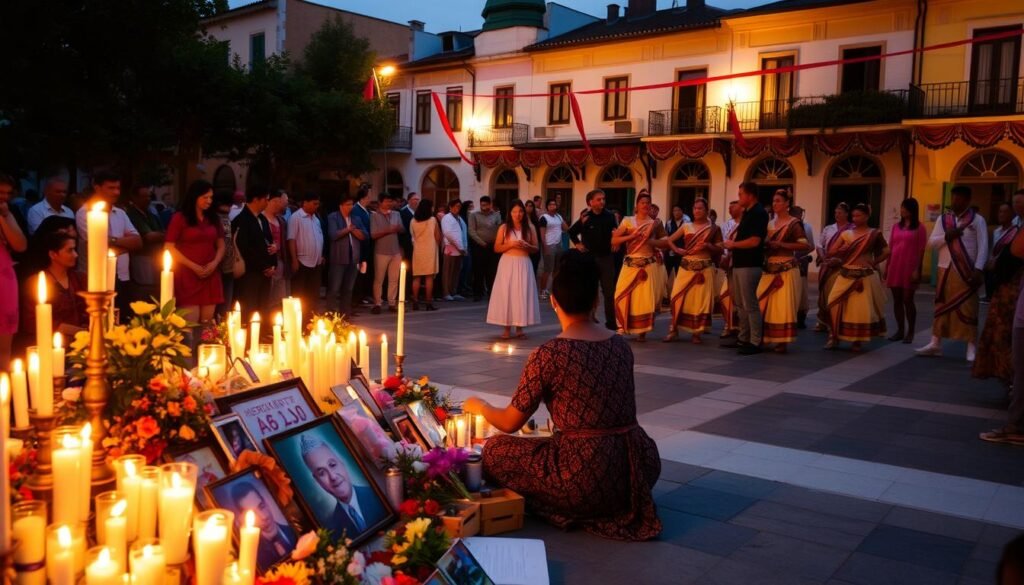
Across the Lower Mainland and beyond, people came together. They shared light, food, prayer, and song. These moments were both old and new, shaped by Filipino traditions.
Candlelit vigils, photos, and rosaries across Vancouver and Canada
In parks, church steps, and halls, candles lit the way. White flowers framed photos of loved ones. At a community vigil Vancouver, people brought rosaries and shared food.
They stood in silence for those lost, including Kira Salim. Families from Richmond to Surrey joined friends from Winnipeg and Toronto. Together, they showed the power of Lapu Lapu Festival memorials across the country.
Parishes and cultural groups offered warm meals after prayers. Volunteers helped people find grief counsellors and support. They made sure mourners left with comfort and contacts.
Artistic tributes, murals, spoken word, and short films
Local artists turned walls into mirrors of memory. Murals near Fraser Street and Mount Pleasant linked names to place with colour. Short films and spoken word pieces played in screenings, balancing pain with dignity.
Curators from Filipino cultural networks invited school choirs and filmmakers. These events in Vancouver made space for reflection. They guided people toward survivor support funds and culturally safe care.
“kai after dark” gatherings: music, kulintang, and quiet remembrance
As evening fell, kai after dark offered dim rooms and soft candles. Choirs and acoustic sets gave way to kulintang music Vancouver. Listeners held hands, whispered prayers, and found peace in the shimmer of gongs.
Elders and youth leaders created gentle arcs of ritual and rest. Through Lapu Lapu Festival memorials and late-night sessions, the blend of drum, voice, and kulintang invited healing. It happened one note, one inhale, one shared moment at a time.
| Gathering Type | Core Elements | Community Partners | Support on Site | Cultural Focus |
|---|---|---|---|---|
| Community Vigil Vancouver | Candles, white flowers, rosaries, photo walls | Parishes, neighbourhood associations, small cafés | Grief counsellors, translation, hot beverages | Prayer, remembrance, shared silence |
| Art Tributes | Murals, spoken word, short films, choir interludes | Local artists, film collectives, school music programs | Donation stations, resource maps, volunteer ushers | Storykeeping, dignity, public memory |
| kai after dark | Soft lighting, acoustic sets, kulintang music Vancouver | Filipino cultural networks, youth leaders, venue hosts | Quiet rooms, peer support, crisis line info | Ritual, breathwork, Lapu Lapu Festival memorials |
| Filipino Events Vancouver | Food sharing, interfaith prayers, community choirs | Community centres, restaurants, faith leaders | Food vouchers, childcare corners, accessibility guides | Care through culture, collective recovery |
Safety Reviews and Event Planning After the Vancouver Festival Attack
After the attack, Vancouver has stepped up its game in festival safety. Now, they see crowded streets as a bigger risk. They’re making sure events are safe without losing the fun.
Risk reassessment: from wooden sawhorses to vehicle-rated barriers
Before, some areas used wooden sawhorses for control. Now, they’re planning to use stronger barriers. This change aims to keep everyone safe, no matter the size of the area.
The city bought mobile barriers from Meridian Rapid Defense Group. These barriers are easy to set up and help manage crowds. They’re a big step towards making festivals safer.
Visible patrols, traffic units, and layered closures at vancouver festival routes
Now, there are more police and traffic teams during busy times. They help keep drivers safe and guide the crowd. There are also special zones and crossings to avoid accidents.
With so many events and protests, Vancouver needs flexible solutions. The police can adjust their setup as needed to keep everyone safe.
Lessons for future vancouver street festival planning and crowd flow
Organizers are trying new ways to manage crowds. They’re using timed entry and stronger barriers. They’re also learning from other cities to make events better.
Meridian Rapid Defense Group’s equipment helps with quick access for vendors and emergencies. There are also quiet areas for those who need a break. These changes make festivals safer and more enjoyable.
| Measure | Purpose | Real-World Application | Benefit to Attendees |
|---|---|---|---|
| Vehicle-rated barriers Vancouver | Stop hostile or errant vehicles at entry points | Deployed with Vancouver Police barriers at key nodes | Safer perimeters with quick emergency access |
| Layered Closures | Create buffer zones and redundancy | Outer traffic calm zone, inner event zone | Smoother approach and clearer wayfinding |
| Visible Patrols & Traffic Units | Deter unsafe driving and guide flows | Peak-hour foot, bike, and car patrols | Faster responses and steady crowd movement |
| Timed Access Windows | Control vendor and service vehicle arrivals | Pre-set slots with steward oversight | Fewer conflicts in dense periods |
| Meridian Rapid Defense Group Gates | Mobile, quick-setup vehicle control | Demonstrated at Chinatown Spring Festival Parade | Flexible openings without losing security |
| Staggered Paths & Bollards | Reduce speed and line-of-sight risks | Borrowed from Toronto, Montreal, New York | Calmer, more predictable walking routes |
Policy and Legal Accountability: Class Action and Public Inquiry Paths
Families and survivors are seeking answers in courts and legislatures. They want to know about decisions made before the attack. They also want safer street events that keep their welcoming spirit.
Claims against Vancouver Coastal Health and the City of Vancouver
A lawsuit against Vancouver Coastal Health is in the Supreme Court of British Columbia. It aims to be a class action Vancouver case. The lawsuit names Vancouver Coastal Health, the City of Vancouver, and Kai‑Ji Adam Lo. It accuses them of negligence in supervision and event management.
John Lind, the plaintiff, suffered from PTSD, a punctured spleen and lung, broken ribs, and kidney damage. He wants to represent injured attendees and families of those who died. The defendants have not commented publicly while the case goes on.
Allegations on event risk level, barricades, and police presence
The lawsuit questions the event’s risk level being labeled “low complexity.” It points out the use of wooden sawhorses instead of barriers rated for vehicles. It also mentions the lack of a dedicated police unit on-site.
It claims Lo was on extended leave with poor oversight. The lawsuit suggests better supervision, escalation triggers, and information-sharing could have reduced risks.
Provincial promise of a public inquiry if gaps remain
The Province has said it might hold a public inquiry BC if the court doesn’t provide enough answers. The goal is to review supervision standards, escalation protocols, and data-sharing across health and public safety systems.
An inquiry would look into event planning, clinical oversight, and police deployment. It could lead to updated guidelines for City of Vancouver event safety and lessons from the accountability vancouver festival attack.
| Issue | What the Claim Alleges | Decision-Maker Referenced | Potential Policy Response |
|---|---|---|---|
| Supervision of Kai‑Ji Adam Lo | Extended leave with inadequate oversight as condition worsened | Vancouver Coastal Health | Clear escalation triggers and cross-agency alerts |
| Event Risk Designation | “Low complexity” label did not match foreseeable hazards | City of Vancouver | Revised risk matrix and independent review panel |
| Physical Barriers | Use of wooden sawhorses instead of vehicle-rated barricades | City of Vancouver | Mandatory certified barriers for open-street events |
| Police Presence | No dedicated on-site unit during peak hours | City of Vancouver | Minimum staffing standards and real-time traffic control |
| System Coordination | Gaps in information-sharing across agencies | Province and local partners | public inquiry BC to set provincewide protocols |
Mental Health, Care Continuum, and Public Safety Debates
After the tragedy, the city’s focus shifted from event barriers to care pathways. Leaders and families wondered how the mental health care continuum in BC could work faster and more fairly. They also looked at how changes to involuntary care in BC align with public safety in Vancouver and civil rights.
Clinicians talk about a ladder of support, from community teams to hospital units, to the Forensic Psychiatric Hospital when a court is involved. They say caseloads, housing, and outreach hours shape outcomes as much as policy. Mayor Ken Sim urged a broader plan, calling it a compassionate mandatory care approach within a mental health care continuum BC that does not leave gaps.
Extended leave oversight, involuntary care expansion, and safeguards
Extended leave aims to keep a person engaged with care while living at home. It relies on quick follow-up, clear medication plans, and defined points to reassess risk. When signs of decline appear, teams weigh involuntary care BC tools against a person’s rights, with safeguards and reviews to check necessity and timing.
Tribunal decisions have probed missed signals, dosing debates, and delayed responses. Advocates argue that stronger standards and real-time monitoring support both dignity and public safety in Vancouver. Others caution that without due process and transparent audits, the system can overreach.
Hospital versus community care: roles, caseloads, and escalation plans
Community care can stabilize people close to family, culture, and work. Yet heavy caseloads and limited hours strain continuity. Escalation plans map when to shift from outreach to hospital admission, and, if needed, to the Forensic Psychiatric Hospital for assessment tied to legal steps.
Clear roles help: family doctors and nurse practitioners for routine care, specialized teams for complex needs, and hospital units for acute risk. Shared records, warm handoffs, and 24/7 contact points reduce gaps that can widen during crisis.
Balancing dignity, treatment, and community safety
Policymakers and clinicians seek a balance where care is timely, respectful, and grounded in evidence. Compassionate mandatory care is framed as a last resort, used to prevent harm and connect people to treatment, housing, and supports.
In practice, public safety in Vancouver depends on early outreach, measured escalation, and oversight that is independent and fast. A robust mental health care continuum in BC aims to protect rights while responding to risk, with clear steps that people and families can understand.
Cultural Touchstones and Memorial Design for Collective Remembrance
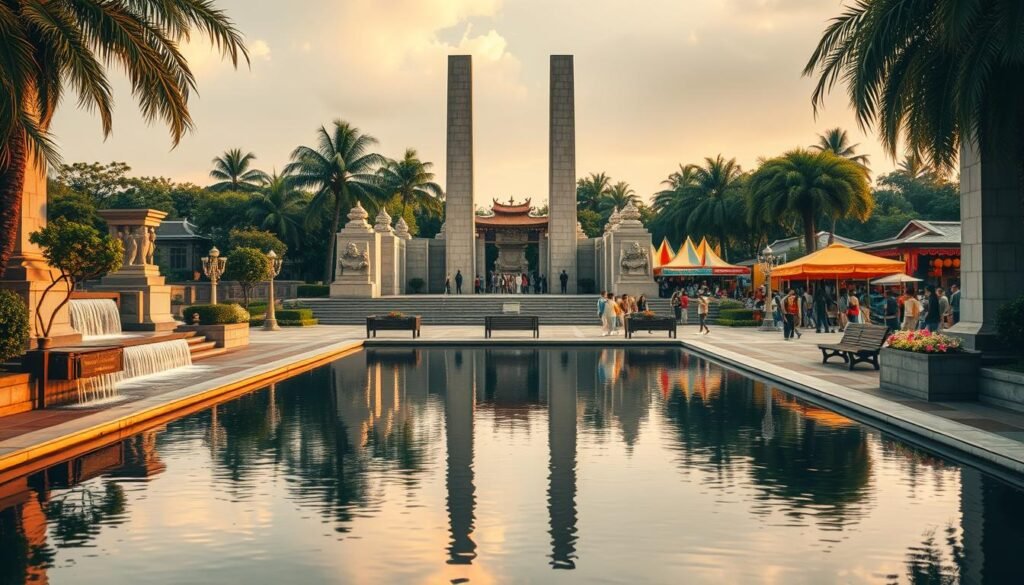
In Vancouver, vigils have set up at various spots. They use candles, flowers, and notes to encourage people to stop and think. A well-designed memorial can hold the spirit of these moments while guiding visitors to help.
Community anchors are key. References to Holy Rosary Hospital show care beyond just services. When memorials point to counselling and support, they help people move from grief to daily life.
Holy Rosary Hospital references and community care networks
Designers blend practicality with compassion. They use signs for clinic hours and support services. The design ensures safe spaces to linger and seek help.
This approach makes the memorial a guide. It connects faith, health, and community care. This way, people can return, reflect, and connect without feeling rushed.
Learning from models like the National September 11 Memorial & Museum
The National September 11 Memorial & Museum uses water, light, and paths to convey meaning. Its design is accessible, with tactile edges and quiet areas. These features are useful for everyone.
Applying these ideas to Vancouver’s memorials means using durable materials and soft lighting. Names and stories should be easy to read from any height.
Language and heritage threads: width in Tagalog, Filipino table setting
Language is important for memory. Using width in Tagalog for banners respects family traditions. Bilingual signs help everyone, including elders and newcomers, to understand.
A Filipino table setting can welcome people after vigils. It symbolizes shared meals, generosity, and togetherness.
- Quiet water features to soften traffic noise
- Bilingual signage with gentle tone and clear icons
- Seating clusters for small groups and solo reflection
- Discreet routes to support services and chaplaincy
- Materials that age well in rain and salt air
| Design Element | Purpose | Local Adaptation | Cultural Note |
|---|---|---|---|
| Water and Light | Foster calm and orientation | Low fountains, shielded LEDs | Echoes lessons from the National September 11 Memorial & Museum |
| Bilingual Wayfinding | Reduce confusion and invite use | English and Tagalog plaques | Includes terms like width in Tagalog for banners and cloths |
| Community Care Nodes | Link reflection to support | Maps to clinics and hotlines | References to Holy Rosary Hospital and local outreach |
| Gathering Nooks | Encourage safe, small-group visits | Weather‑sheltered benches | Space for a respectful filipino table setting after vigils |
| Durable Finishes | Withstand daily urban life | Stone, cedar, stainless steel | Long‑term stewardship within a Vancouver memorial design |
Conclusion
Six months have passed, and the Lapu Lapu Festival stands as a symbol of both joy and sorrow. It celebrates courage and culture, yet also remembers the vancouver festival attack. The case against Kai-Ji Adam Lo is moving forward, with updates on disclosure and bans.
Despite the challenges, the community comes together. They share food, music, and moments of silence. These acts honor the loss and the strength of those who have endured.
Improvements in safety are underway. The City of Vancouver is introducing new barriers and increasing patrols. Experts stress the importance of clear communication and crowd management.
This shift is part of Vancouver’s quest for accountability. It ensures that the festival remains a safe space for families to gather.
Civil lawsuits have been filed against Vancouver Coastal Health and the City of Vancouver. They highlight concerns about event safety and supervision. The province has hinted at a public inquiry if these issues are not resolved.
The city is healing through various events and gatherings. Elders and youth are keeping traditions alive. Neighbors are supporting each other, fostering a sense of community.
This blend of cultural preservation, improved safety measures, and accountability is what makes the Lapu Lapu Festival endure. It celebrates Filipino heritage while welcoming everyone. It stands as a beacon of unity and shared purpose in Canada.

Be the first to comment