


Only 37.07% to 37.13% of voters chose the next City Hall leaders. Yet, they cast over 421,000 votes, changing the map of greater Montreal. This small group’s votes tell the story of the 2025 election and set the city’s direction for four years.
Élections Montréal’s count showed Soraya Martinez Ferrada winning with 43.40%. She beat Luc Rabouin by 35.05%. Gilbert Thibodeau and Craig Sauvé also ran, showing how diverse opinions and turnout influenced the vote. These numbers are key to understanding the election’s outcome.
Ensemble Montréal now has a majority on council, thanks to wins in LaSalle and Anjou. Shifts in Ahuntsic‑Cartierville, Côte‑des‑Neiges–Notre‑Dame‑de‑Grâce, and Mercier–Hochelaga–Maisonneuve show the election’s impact. Projet Montréal kept strongholds like Plateau‑Mont‑Royal and Rosemont–La Petite‑Patrie. This breakdown shows how each district voted and how small changes can affect the city.
Readers will learn about turnout, margins, and how overnight counts influenced the results. From the mayoral race to borough mayors, the data paints a detailed picture. It explains what changed, why, and what’s next for Montreal.
Live Overview: Election results 2025 across greater Montreal
Élections Montréal’s real-time tallies show a big change in the mayoral vote. Election results 2025 came in across greater Montreal. The results matched voting polls that said there would be a big change in some areas.
Final mayoral vote share and turnout context
Soraya Martinez Ferrada won with 43.40% of the vote. Luc Rabouin got 35.05%. Gilbert Thibodeau and Craig Sauvé got 10.16% and 8.45% respectively.
There were about 421,100 to 421,700 votes cast. Turnout was between 37.07% and 37.13% of 1,135,883 registered voters. This shows a big change in the city.
What changed on council: from Projet to Ensemble
The council map changed from Projet Montréal to Ensemble Montréal. Ensemble now has 34 seats, more than Projet’s 25. This means Ensemble has control.
Ensemble won in many areas, like Ahuntsic-Cartierville and Côte-des-Neiges-NDG. Projet Montréal kept some areas, like Plateau-Mont-Royal. This change was expected based on voting polls.
How late counts shifted tight races overnight
Ensemble was leading in 32 seats on election night. But, as more votes came in, they won more seats. This made some races very close.
Updates on .montreal and Élections Québec showed the big change. Areas with more advance votes helped decide the final results.
Montreal mayoral race: Soraya Martinez Ferrada defeats Luc Rabouin
Montreal has chosen a new path with the mayoral vote. The campaign focused on housing, mobility, and public spaces. The final week was intense, with polls showing a shift towards the winner.
Final tally and percentages from Élections Montréal
Élections Montréal reported Soraya Martinez Ferrada with 178,618 votes, or 43.40%. Luc Rabouin trailed with 144,235 votes, or 35.05%. Gilbert Thibodeau of Action Montréal got 41,818 votes (10.16%), and Craig Sauvé of Transition Montréal earned 34,787 (8.45%).
Total valid ballots were 411,565, with 9,550 rejected. This made a total of 421,115. A verified snapshot showed 43.33% versus 34.99%, highlighting the election’s margin.
Mandate implications with Ensemble Montréal’s majority
Ensemble Montréal holds 34 council seats. This means they control key decisions and the budget. Ville‑Marie appointments add stability, helping to pass policies smoothly.
This power structure allows for quicker action on transit, permits, and public spaces. It ensures the mayoral vote aligns with a council ready to pass important files.
How the race compared with st louis election results narratives
Turnout patterns and late deciders showed similarities with st louis. Urban cores and outer boroughs had different voting patterns. Overnight counts highlighted these contrasts.
Both cities saw low-to-mid participation affecting the outcome. Montreal’s focus on rent, bus lanes, and safety defined its election story.
City council control and borough power map
After the 2025 election, Montreal’s city council map shows the impact of party lines and local slates. Ensemble Montréal and Projet Montréal now set the pace for the city. They will decide on committee chairs, planning files, and budget votes.
65 seats explained: 33 for a working majority
The city council has 65 seats, including the mayor, 18 borough mayors, and 46 city councillors. To have a working majority, 33 votes are needed. Ensemble Montréal has 34 seats, while Projet Montréal has 25.
Local slates also play a role. Équipe LaSalle has 3 seats, Équipe Anjou has 2, and Équipe St‑Léonard has 1. These numbers determine how motions move through the boroughs.
Ville‑Marie exception: appointed councillors and council math
Ville‑Marie has a unique rule. The mayor appoints two city councillors for the district. This rule affects the council’s math and decision-making.
These appointments are key in Ville‑Marie, which is Montreal’s core. They influence decisions on mobility, housing, and public works. This impact spreads to other boroughs when votes align.
Alliances with Équipe LaSalle and Équipe Anjou
Ensemble Montréal works with Équipe LaSalle in LaSalle. This partnership ensures consistent votes on budgets and planning. They also have an alliance with Équipe Anjou, formed before the campaign ended.
These alliances shape the power map after the 2025 election. Borough changes in Ahuntsic‑Cartierville, Côte‑des‑Neiges–NDG, and Mercier–Hochelaga–Maisonneuve are balanced by Projet Montréal’s strongholds. This sets a clear path for organizing work in the city.
voting polls: how Léger, Segma, and Pallas lined up with the result
Voting polls from Léger, Segma, and Pallas showed Ensemble Montréal’s candidate gaining support. The mayoral vote was close at first, then widened as undecided voters made their choice. People following the polls saw a pattern: support grows as choices get clearer and the ground game becomes important.
Method and timing shaped the read on momentum. Phone and online polls gave different views of the city. Yet, each update moved the story closer to the election results 2025.
Late‑cycle trends and high undecided shares
Léger’s August poll showed Soraya Martinez Ferrada leading Luc Rabouin, with many undecided. Later polls in September kept undecided numbers high, even as Martinez Ferrada’s lead grew and Rabouin’s support waned.
Segma’s early October poll (n=1,002; ±3.1%) showed a bigger gap and many undecided voters. By late October, Pallas Data’s phone poll (n=608; ±4%) showed Martinez Ferrada’s support rising sharply, with Rabouin holding a steady second place. The election night results matched these late trends.
Turnout patterns among older and non‑francophone voters
Areas with more older and non‑francophone voters saw steady turnout, boosting Ensemble Montréal. English and allophone areas, concerned with services and taxes, leaned towards stability. This mirrored the citywide election results 2025.
These areas showed a firmer base where turnout is steady, matching the citywide election results 2025.
Linking local shifts to canada election 2025 polls interest
Interest in canada election 2025 polls and canada election polls 2025 grew as the campaign progressed. The same themes—cost of living, incumbency, and leader definition—appeared in Montreal’s close races.
As polls tightened, Léger and Pallas tracked undecided voters’ leanings. Segma captured the mid-campaign shift. Together, they showed how a local surge can build amidst national noise.
| Pollster | Field dates / Mode | Sample / MOE | Martinez Ferrada | Rabouin | Other | Undecided | Key read |
|---|---|---|---|---|---|---|---|
| Léger (Baseline) | August / Online | — / — | 18% | 15% | — | 41% | High uncertainty with early edge |
| Léger (Mid‑Sept.) | September / Online | — / — | 20–21% | 11–12% | — | 48% | Edge grows despite larger undecided |
| Léger (Late Sept.) | Late Sept. / Online | — / — | 20–21% | 11–12% | — | 42% | Stability before debates bite |
| Segma | Oct. 3–9 / Mixed | 1,002 / ±3.1% | 26% | 18% | — | 37% | Gap widens; undecided yet large |
| Pallas Data | Oct. 25 / Phone | 608 / ±4% | 33% | 18% | 17% | 29% | Late rise confirmed by phone reach |
| Final outcome | Election night | Citywide | 43.40% | 35.05% | 21.55% | — | Trend aligns with late‑cycle readings |
Borough mayors: island‑wide winners and flips
The mayoral vote showed clear patterns across the island. Winners in the north and east, like Henri Bourassa, were evident. Voters chose based on local needs, but turnout was steady enough to redraw borough maps.
Ensemble gains: Ahuntsic‑Cartierville, Côte‑des‑Neiges–NDG, Mercier–Hochelaga‑Maisonneuve
Ensemble Montréal made big strides in Ahuntsic‑Cartierville, Côte‑des‑Neiges–NDG, and Mercier–Hochelaga‑Maisonneuve. Maude Théroux‑Séguin led the charge in the north, echoing the Henri Bourassa corridor’s influence. Stéphanie Valenzuela won over diverse areas west of Décarie, while Chantal Gagnon focused on housing and mobility in the east.
In Bordeaux‑Cartierville, Effie Giannou won a seat, showing how borough swings can impact council seats. This pattern matched the mayoral vote trends seen in 2025.
Projet holds: Plateau‑Mont‑Royal, Rosemont–La Petite‑Patrie, Verdun, Le Sud‑Ouest, Lachine
Projet Montréal kept its strongholds where its ground game is robust and incumbents are well-known. Cathy Wong held Plateau‑Mont‑Royal, and François Limoges kept Rosemont–La Petite‑Patrie. Céline‑Audrey Beauregard won Verdun, and Véronique Fournier remained in Le Sud‑Ouest.
Lachine stayed with Maja Vodanovic after a close count, showing the importance of established networks. These holds balanced Ensemble’s gains, keeping the borough mayors’ maps competitive.
Stable leadership: St‑Laurent, Montréal‑Nord, Pierrefonds‑Roxboro
Several boroughs saw continuity in leadership. Alan DeSousa won again in St‑Laurent, and Christine Black returned in Montréal‑Nord with a clear margin. Dimitrios (Jim) Beis dominated Pierrefonds‑Roxboro, continuing a long‑running West Island trend.
Local slates also played a role in the outcomes. Équipe LaSalle and Équipe Anjou stayed in power, adding stability to the council. In Montréal‑Nord’s Marie‑Clarac, Youssef Hariri led the city‑council voting, while Chantal Rossi won in Ovide‑Clermont, reinforcing the 2025 election narrative.
| Borough | Winning party/slate | Winning candidate | Notable context |
|---|---|---|---|
| Ahuntsic‑Cartierville | Ensemble Montréal | Maude Théroux‑Séguin | North‑end surge near winners Henri Bourassa corridor; Bordeaux‑Cartierville elected Effie Giannou |
| Côte‑des‑Neiges–NDG | Ensemble Montréal | Stéphanie Valenzuela | Broad coalition across CDNs and NDG; aligned with mayoral vote uptick |
| Mercier–Hochelaga‑Maisonneuve | Ensemble Montréal | Chantal Gagnon | East‑end momentum; affordability and transit framed the shift |
| Plateau‑Mont‑Royal | Projet Montréal | Cathy Wong | Core‑urban hold with strong ground game |
| Rosemont–La Petite‑Patrie | Projet Montréal | François Limoges | Durable support anchored by incumbency |
| Verdun | Projet Montréal | Céline‑Audrey Beauregard | Riverside ridings maintained with modest margin |
| Le Sud‑Ouest | Projet Montréal | Véronique Fournier | Canal corridor stayed green amid development pressures |
| Lachine | Projet Montréal | Maja Vodanovic | Narrow hold after late counts |
| St‑Laurent | Independent | Alan DeSousa | Stable leadership and administrative continuity |
| Montréal‑Nord | Independent | Christine Black | Clear majority; Marie‑Clarac saw Youssef Hariri lead, Ovide‑Clermont led by Chantal Rossi |
| Pierrefonds‑Roxboro | Independent | Dimitrios (Jim) Beis | Large margin consistent with West Island trends |
| LaSalle | Équipe LaSalle | Nancy Blanchet | Local slate backing supported by citywide alliances |
| Anjou | Équipe Anjou | Luis Miranda | Long‑standing local slate maintained borough control |
Key races to watch: Dorval, Côte‑Saint‑Luc, and Montreal West
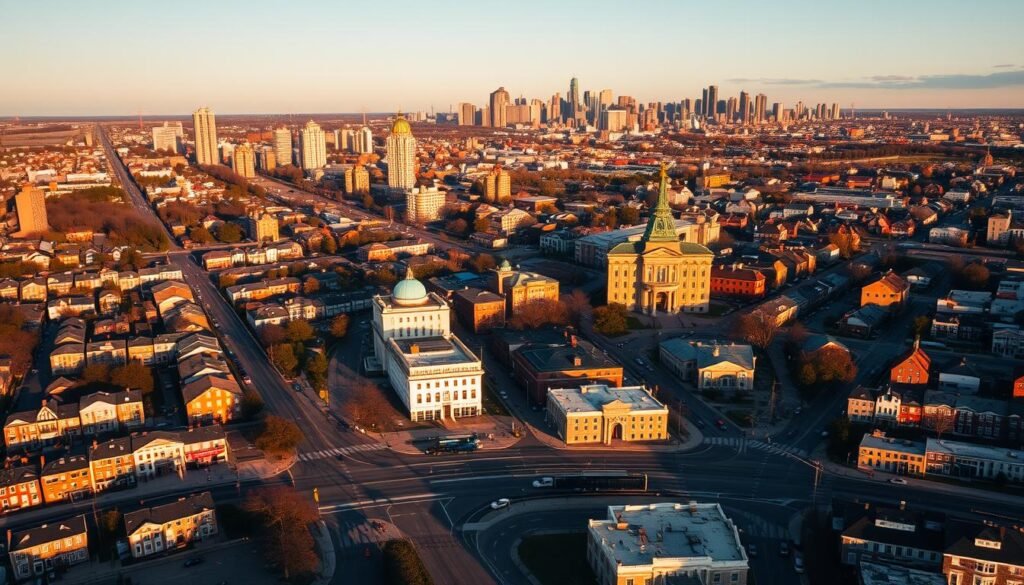
The West Island and demerged municipalities saw very close races. Dorval, Côte‑Saint‑Luc, and Montreal West were at the center of the election story. The results were tight, with late reports and advance ballots making a big difference.
Dorval’s 225‑vote edge for Marc Doret pending official confirmation
In Dorval, Marc Doret was 225 votes ahead of Umberto Macri when all polls were in. The areas near the airport and Lakeshore saw a lot of activity. This was due to hard work and a strong ground game.
Experts in greater Montreal said the lead was because of good advance voting. This showed the importance of early voting in tight races.
Côte‑Saint‑Luc’s razor‑thin Brownstein–Tordjman margin
Côte‑Saint‑Luc was another close race. Mayor Mitchell Brownstein was just ahead of David Tordjman after the votes were counted. The areas around Cavendish and Westminster were very active, showing strong voter engagement.
This engagement was key in shaping the election results 2025. It showed how important every vote is in tight races.
Montreal West shift: Jonathan Cha defeats Beny Masella
Montreal West saw a change at the top. Jonathan Cha beat Beny Masella, with Franco Forlini coming in third. This change shows how important late voters can be in close races.
When voters in key areas turn out in large numbers, it can change the outcome. This was true across greater Montreal on election night.
| Municipality | Leading/Cited Outcome | Top Candidates | Edge/Margin Noted | Turnout Hotspots | Takeaway for election results 2025 |
|---|---|---|---|---|---|
| Dorval | Marc Doret leading pending confirmation | Marc Doret vs. Umberto Macri | 225 votes | Airport corridor, Lakeshore areas | Advance ballots and late reports aligned with voting polls signals |
| Côte‑Saint‑Luc | Mitchell Brownstein narrow lead | Mitchell Brownstein vs. David Tordjman | About 50 votes | Cavendish, Westminster precincts | Concentrated participation shaped the final election result |
| Montreal West | Jonathan Cha elected | Jonathan Cha vs. Beny Masella; Franco Forlini third | Small but decisive gap | Core residential districts | Late‑breaking voters in greater Montreal influenced tight margins |
Greater Montreal round‑up: Laval and South Shore headlines
In greater Montreal, voters chose stability in the 2025 election. The South Shore and Laval both showed a preference for continuity. Early voting polls suggested this trend, and the final results confirmed it.
Longueuil: Catherine Fournier re‑elected
Catherine Fournier won again in Longueuil, solidifying the city’s place in the South Shore. Her victory was part of a larger trend in Montreal, where known leaders did well. The city’s core areas played a big role in securing her win.
Brossard: Doreen Assaad surpasses 80% support
In Brossard, Doreen Assaad got more than 80% of the vote. This result was clear and showed the importance of local votes. It also matched the South Shore’s overall trend.
Laval: Stéphane Boyer projected to return as mayor
North of the island, Laval voted for stability with Stéphane Boyer likely to be re-elected. The city’s vote followed Montreal’s trend, where known faces won. Voting polls late in the campaign hinted at this, and the final results showed it.
For full municipal tallies and confirmations, readers followed national broadcasters and official election pages throughout the night.
West Island and demerged municipalities: who’s in, who’s out
The West Island showed strong local support in the 2025 election. People voted based on what they needed, who they knew, and past service. This shaped the election results in these areas.
Pointe‑Claire: John Belvedere regains mayoralty
John Belvedere won back the mayoral seat in Pointe‑Claire, beating Tim Thomas. The main issue was keeping the city running smoothly and improving its infrastructure. This concern was shared across the West Island.
Beaconsfield: Martin St‑Jean succeeds Georges Bourelle
Beaconsfield chose Martin St‑Jean as its new mayor, after Georges Bourelle retired. People wanted consistent service and better traffic management. This choice was a clear sign of what voters wanted in a year of big changes.
Westmount: Michael Stern elected; TMR: Peter Malouf re‑elected; Hampstead: Jeremy Levi wins
In Westmount, Michael Stern won over Lynne Casgrain and Mary Gallery. He promised to manage the budget wisely. In Mount Royal, Peter Malouf was re-elected. Hampstead chose Jeremy Levi over Jack Edery, with William Steinberg coming in third. These choices showed what each area wanted, not just what the island wanted.
Acclamations: Kirkland, Dollard‑des‑Ormeaux, Boucherville, Île‑Dorval
Kirkland and Dollard‑des‑Ormeaux confirmed their mayors without a contest. Boucherville and Île‑Dorval also had no opposition. This part of the election was quieter, showing a different side of the 2025 map.
Other news came from Sainte‑Anne‑de‑Bellevue, where Michel Boudreault beat Paola Hawa. Côte‑Saint‑Luc and Dorval were also closely watched. Their results added to the excitement of the night.
Turnout, ballots, and how Montreal votes
Montreal’s civic map shows how process shapes power. The city records every mayoral vote and each borough race under the same rules. But, neighbourhood rhythms differ. This mix set the tone for the election result reported across the island in the election results 2025 cycle.
37.13% turnout, 421,7xx ballots, valid vs. rejected shares
Turnout reached 37.13%, with 421,728 ballots cast from 1,135,883 eligible voters. Of those, 411,784 were valid and 9,944 were rejected. A corroborating tally logged 421,115 ballots and 411,565 valid votes, with 9,550 rejected, showing a minor variance but the same pattern.
These counts frame the mayoral vote and the broader election result. They give context to close wards and strongholds alike.
| Metric | Main Count | Corroborating Count | Share | Insight |
|---|---|---|---|---|
| Eligible Voters | 1,135,883 | 1,135,883 | — | Citywide base for all races |
| Ballots Cast | 421,728 | 421,115 | 37.13% / 37.07% | Stable participation across tallies |
| Valid Votes | 411,784 | 411,565 | 97.64% | High validity aids clear calls |
| Rejected Votes | 9,944 | 9,550 | 2.36% | Consistent rejection rate |
First‑past‑the‑post across mayor, 18 borough mayors, 46 city councillors, 38 borough councillors
Montreal uses first‑past‑the‑post for the citywide mayor, 18 borough mayors, 46 city councillors, and 38 borough councillors. All 18 borough mayors sit on the 65‑member council. This council holds a lot of power after each election result.
The Ville‑Marie exception lets the mayor appoint two councillors. This can shape committees and votes. It can also sway tight margins, even when the ballots cast are close.
What low participation means for mandate and policy pace
Lower participation, and uneven turnout among older and non‑francophone voters, amplified late shifts seen in polls. This pattern helped Ensemble Montréal in key boroughs. It also influenced the final election results 2025 map.
With a clear council edge, a faster tempo on mobility, housing, and climate is feasible. Borough coalitions anchor local files. Ville‑Marie’s role remains key as the mayoral vote converts into governing leverage.
Parties, leaders, and local slates shaping outcomes
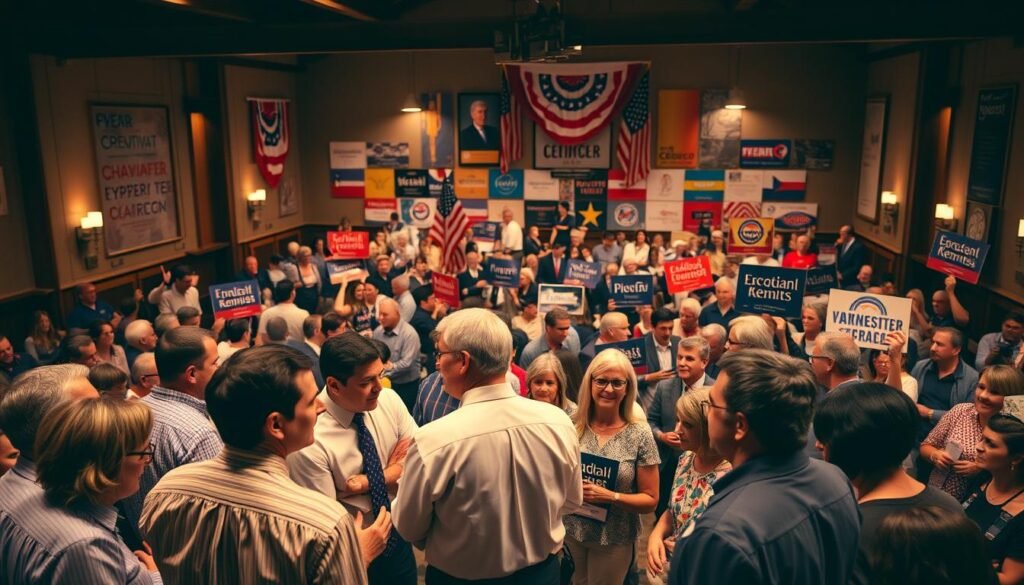
Ground games, endorsements, and borough alliances defined the citywide map. Momentum captured by voting polls late in the race set the tone. But local slates and tactical retreats decided margins on the ground.
Ensemble Montréal under Soraya Martinez Ferrada: strategy and path to victory
Ensemble Montréal, led by Soraya Martinez Ferrada, focused on winnable targets and credible partners. The party stood down in LaSalle after a Sept. 30 announcement. They aligned with Équipe Anjou, later coordinating with Équipe LaSalle. This discipline freed resources for flips in multi‑seat boroughs.
Field operations leaned on strong neighbourhood data and late undecided movement flagged by voting polls from Léger, Segma, and Pallas. Endorsements amplified the pitch in swing districts and helped lock in turnout.
Projet Montréal under Luc Rabouin: strongholds and leadership reset
Projet Montréal, under Luc Rabouin, protected core bases in Plateau‑Mont‑Royal, Rosemont–La Petite‑Patrie, Verdun, Le Sud‑Ouest, and Lachine. The party’s urbanist brand resonated near Metro hubs and dense corridors.
Losses in Ahuntsic‑Cartierville, Côte‑des‑Neiges–NDG, and Mercier–Hochelaga–Maisonneuve showed slippage with homeowners and new arrivals. A leadership reset now looms as organizers study ward‑level swings and what voting polls missed.
Action Montréal and Transition Montréal: vote shares without seats
Action Montréal under Gilbert Thibodeau and Transition Montréal under Craig Sauvé carved notable mayoral shares citywide—double‑digit for the former, high single‑digit for the latter—yet neither converted to council gains.
Issue‑based outreach and cross‑borough endorsements boosted visibility. In Lachine, Micheline Rouleau’s late backing of Transition Montréal figures and selected Ensemble bids revealed fluid loyalties shaped by local stakes more than party labels.
Local slates: Équipe LaSalle, Équipe Anjou, Équipe St‑Léonard
Équipe LaSalle, led by Nancy Blanchet, held LaSalle and swept key council spots, validating Ensemble’s decision not to split that vote. Équipe Anjou under Luis Miranda dominated across the borough, turning coordinated efforts into clean wins.
Équipe St‑Léonard, led by Suzanne De Larochellière, secured representation and forced tighter three‑way contests. Veteran borough figures such as Christine Black and Alan DeSousa reinforced stability nearby, while candidate switches in Hochelaga and Snowdon added late volatility tied to voting polls and doorstep feedback.
Conclusion
Montreal chose Soraya Martinez Ferrada as its new mayor with 43.40% of the vote. This marked the end of the Projet Montréal era. Ensemble Montréal now holds a majority on city council with 34 out of 65 seats.
About 37.1% of people voted, casting around 421,000 ballots. Voting polls from Léger, Segma, and Pallas showed late shifts. These changes were seen in increased voting among older and non-francophone residents across greater Montreal.
Borough maps show Ensemble’s gains in Ahuntsic-Cartierville, Côte-des-Neiges-NDG, and Mercier-Hochelaga-Maisonneuve. Projet Montréal kept Plateau-Mont-Royal and Rosemont-La Petite-Patrie. Local teams like Équipe LaSalle and Équipe Anjou also played a role.
In the suburbs, Longueuil re-elected Catherine Fournier, and Brossard’s Doreen Assaad won with 80%+. Laval is expected to return Stéphane Boyer, completing the 2025 election picture.
Demerged contests showed different results. Dorval and Côte-Saint-Luc were close, while Westmount, Town of Mount Royal, Hampstead, Pointe-Claire, and Beaconsfield had clear winners. These outcomes explain the election’s trajectory from polls to final tallies in greater Montreal.
The city now looks to the future. With a stable council, the next four years will focus on housing, mobility, and climate. Borough alliances will guide the pace and priorities, with the mayoral vote setting the direction and the 2025 results framing the work ahead.

Be the first to comment